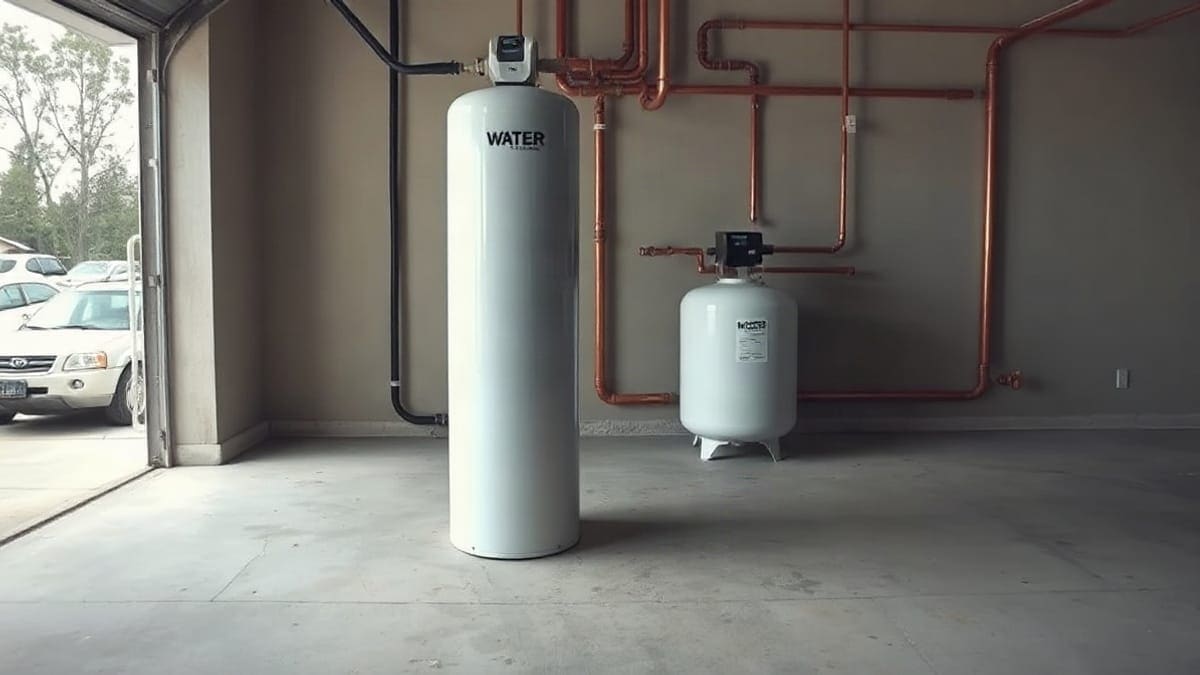
Salt-free systems are sold as softeners, but none of the eight below removes calcium or magnesium. They change how scale forms, so the water keeps the same hardness on a test strip. We read the maker pages, the lab studies and the certification rules, and we flag every figure that conflicts. No prices are printed. The evidence is real for scale on a water heater and thin for everything else, and no model here holds a scale-performance listing we could find. Read your hardness and iron first, then pick by flow, limits and media life, as the sections below do.
Eight salt-free systems at a glance
Water check
Eight whole-house systems rated 7.0 to 15.3 GPM share one trait: none removes hardness. Their hardness limits run from 15 gpg (Aquasana) to 75 gpg (SpringWell), and only the SpringWell and Aquasana media is rated for years rather than months.
The table lists each maker's own figures. Where two pages from one maker disagree, both numbers are shown.
| Model | How the maker says it works | Flow (maker) | Homes | Hardness limit | Media or cartridge | Warranty |
|---|---|---|---|---|---|---|
| SpringWell FutureSoft FS1 | Salt-free media, template-assisted crystallization (TAC) as SpringWell's page names it | 12 GPM (size guide says 9) | 1 to 3 baths | 75 gpg | 5+ years | Lifetime vs defects |
| SpringWell FutureSoft FS4 | Same media | 15 GPM (size guide says 12) | 4 to 6 baths | 75 gpg | 5+ years | Lifetime vs defects |
| Aquasana Salt-Free Water Conditioner | Scale Control Media | 7.0 GPM rated, 15.3 GPM peak | not stated | under 15 gpg | 10 years or 1,000,000 gal | 10 years |
| APEC Futura-10 | Catalytic ceramic media | 10 GPM | 1 to 3 baths | 25 gpg | 3 to 5 years | 10 years |
| Aquios AQFS220 | Glassy polyphosphate cartridge | 12 to 15 GPM | "average family" | 25 or 30 gpg | about 6 months | 10 years, housing and valve |
| NuvoH2O Home | Citrus-based formula | not stated | under 1,500 sq ft | 25 gpg | about 6 months or 20,000 gal | 5 years |
| NuvoH2O Manor | Citrus-based formula | not stated | over 1,500 sq ft | 25 gpg | about 6 months or 50,000 gal | 5 years |
| Aquasure Serene 10 GPM | "Salt-free anti-scale technology" | 10 GPM | 1 to 3 baths, up to 4 people | not stated | not stated | 5 years if activated online in 60 days |
Which salt-free system suits which home?
Find the row that matches your water and your house. The picks follow the maker figures in the first table, and none rests on a certified scale result, because none of the eight has one that we could find. Where two rows could fit, take the one with the wider hardness margin, since a unit run near its limit gets less scale protection. Check the iron figure before anything else.
| Your situation | Pick | Why |
|---|---|---|
| City water, 1 to 3 baths, no iron | SpringWell FS1 | 12 GPM, 75 gpg ceiling, 6 x 35 in tank |
| City water, 4 to 6 baths | SpringWell FS4 | 15 GPM, 9 x 48 in tank |
| Long media life, hardness under 15 gpg | Aquasana | 10 years or 1,000,000 gal, 10 year warranty |
| Fixed 10 year warranty on a media tank | APEC Futura-10 | 10 years, 25 lb, 9 x 48 in |
| Small footprint, no tank | NuvoH2O Home | 5.67 x 22.74 in, 7 lb |
| Larger home, cartridge format | NuvoH2O Manor | 7.43 x 25.25 in, 16 lb, 1 in ports |
| Filter cartridge and scale control in one housing | Aquios AQFS220 | 24 x 5.5 in, 5 micron carbon |
| One-bath-to-three-bath bundle with a pre-filter | Aquasure Serene 10 GPM | 10 GPM, up to 4 people |
For the full field of softeners, including salt-based units, see the best water softener page and the salt vs salt-free comparison. Brand pages: SpringWell and APEC.
The eight salt-free systems in detail
Water check
The eight systems stand 22.7 to 48 in tall and weigh 7 to 25 lb on the pages that give a weight. Each section gives the maker's flow, limits and certification claim, plus the buyer who should look elsewhere.
SpringWell FutureSoft FS1: the widest hardness range
The FS1 serves 1 to 3 bathrooms at 12 GPM on a tank 6 in wide and 35 in tall (39 in with the head), and SpringWell lists a hardness limit of 75 gpg on this page and 81 gpg on its combo page for the same size. SpringWell's spec table gives 20 to 80 psi, 34 to 120°F, pH 7.0 to 9.5 and a free chlorine ceiling of 3 ppm. Iron, manganese, copper and hydrogen sulfide are all listed at 0 ppm, and SpringWell advises pretreatment on a well. The media is rated 5+ years, with a 5 micron sediment pre-filter included.
SpringWell's page says the media works by template-assisted crystallization and "prevents up to 95% of scale buildup", a maker claim that no listing backs. The page lists no certification, and a search of the NSF database for SpringWell returned no matching products under the company name, and none under the trade name either on November 18. SpringWell's size guide gives 9 GPM for this model, while the spec table gives 12 GPM, so ask which applies. The lifetime warranty is void on water outside the stated limits and covers registered owners only. A reviewer who installed it at home reports most limescale prevented, with spotting that wipes away. More in our SpringWell FutureSoft review.
Best for: city water, 1 to 3 bathrooms, no iron, wide hardness range. Not for: a well with iron, or a buyer who needs a certified scale result.
SpringWell FutureSoft FS4: the same media for 4 to 6 bathrooms
The FS4 is 9 in wide and 48 in tall (52 in with the head), rated 15 GPM for 4 to 6 bathrooms, with the same 75 gpg limit, 20 to 80 psi range and 0 ppm iron ceiling as the FS1. The size guide on the same site lists 12 GPM, a 3 GPM gap that matters if the house runs two showers and a washer together. SpringWell also sells an FS+ at 20 GPM for 7 or more bathrooms, on a 13 x 54 in tank.
The certification picture is the same as the FS1: no standard named, nothing in the NSF database. The media is rated 5+ years and no gallon rating is given.
Best for: a larger city-water house with no iron. Not for: a house that needs a drain-free unit under 40 in tall, since the head alone brings it to 52 in.
Aquasana Salt-Free Water Conditioner: the longest media rating
Aquasana's WH-SFWC-S has Scale Control Media rated for 10 years or 1,000,000 gallons, a rated flow of 7.0 GPM and a peak flow of 15.3 GPM, on a tank 9 in across and 46 in tall. The product page sets limits of under 15 gpg of hardness, under 0.3 ppm of iron, under 250 mg/L of alkalinity, a pH below 8.3, 40 to 90°F and 100 psi. It ships with a 20 in pre-filter to change every 2 months and a 10 in post-filter to change every 6 months, and carries a 10 year limited warranty and a 90 day guarantee.
The page says the system was "independently tested" and names no lab and no percentage. The NSF database lists two Aquasana products, both ultraviolet units under NSF/ANSI 55, and no conditioner.
Best for: moderate-hardness city water and a buyer who wants a 10 year media rating. Not for: water above 15 gpg or any iron above 0.3 ppm.
APEC Futura-10: catalytic media with a 10 year warranty
The Futura-10 is rated 10 GPM for 1 to 3 bathrooms, measures 9 in across and 48 in tall (53 in with the tank top), weighs 25 lb and carries a 10 year limited warranty. APEC lists a 25 gpg maximum hardness, pH 6.0 to 9.0, 41 to 120°F, 2 ppm of chlorine, 0 mg/L of iron and manganese and 1.3 mg/L of copper. The media is replaced every 3 to 5 years and the bypass is 1 in.
APEC's FAQ says the unit "doesn't trap the hardness" and describes a ceramic catalyst that turns dissolved calcium and magnesium into crystals. It says the media is certified by the WQA to NSF/ANSI 61, which covers materials in contact with drinking water and says nothing about scale. We could not query the WQA form, and the NSF database for APEC returned no matching products. See the APEC brand page.
Best for: a 1 to 3 bathroom house on water under 25 gpg with no iron. Not for: a buyer who needs a scale-performance certificate.
Stock: on November 18, 2026 APEC's own site showed the Futura-10 as sold out. APEC's larger Futura-20, described on its page for larger homes, was available. We did not read the Futura-20's specifications, so check APEC's page for its limits and warranty before you choose a size.
Aquios AQFS220: a polyphosphate cartridge, not a tank of media
The AQFS220 is a 24 x 5.5 in housing with a glassy polyphosphate scale cartridge and a 5 micron carbon filter, rated 12 to 15 GPM on a 3/4 in connection, and the cartridge is replaced about every 6 months. Aquios gives 100 psi maximum, a 2 psi pressure drop and 40 to 110°F. The warranty is 10 years on the housing and valve.
The page contradicts itself on hardness: "up to 25 gpg (427 ppm)" in the features and "up to 30 gpg (513 ppm)" in the specifications. It claims the unit "removes existing calcium scale" and gives no data. It calls the media "certified" and names no NSF or WQA standard, and the NSF database for Aquios shows no matching products. A 12 to 15 GPM claim on a 3/4 in port deserves a question to Aquios.
Best for: a small house that wants scale control and a carbon filter in one housing. Not for: anyone who wants to avoid a cartridge change twice a year.
NuvoH2O Home: the compact cartridge system
The Home is 5.67 in wide and 22.74 in tall, weighs 7 lb with its cartridge, has 1 in ports and is rated to 25 gpg, with a cartridge that lasts about 6 months or 20,000 gallons. NuvoH2O lists 45 to 65 psi as optimal (100 psi maximum), pH 7.3 to 8.5 and a 5 year limited warranty. The maker aims it at homes under 1,500 sq ft and gives no flow rating.
NuvoH2O says it "complies with NSF ANSI Standard 42". The NSF database for NuvoH2O lists two products, models S2075 and WH2100, both filter housings certified under NSF/ANSI 42 for material and structural integrity only. Standard 42 covers taste and odor effects, not scale, and "complies" is not "certified".
Best for: a small house that wants a compact unit with no mineral tank. Not for: a family of four, since 20,000 gal is about 67 days at 300 gal a day.
NuvoH2O Manor: the larger cartridge unit
The Manor is 7.43 in wide and 25.25 in tall, weighs 16 lb, has 1 in ports and a cartridge rated about 6 months or 50,000 gallons, on water up to 25 gpg. The Manor page names a citrus-based formula called CitraCharge, 45 to 65 psi optimal and 100 psi maximum, pH 7.3 to 8.5 and a 5 year limited warranty. The maker says it breaks down existing scale over time and cites no data. No flow rating is printed.
The certification claim and the database result match the Home. A family of four at 300 gal a day empties 50,000 gal in about 167 days, so the 6 month figure fits a household of about 4 only just.
Best for: a house over 1,500 sq ft that accepts cartridge changes. Not for: a buyer who wants a flow figure before paying.
Aquasure Serene 10 GPM: the bundle with a pre-filter
The Serene Series 10 GPM conditioner is sold for 1 to 3 bathrooms and up to 4 people, with a triple-purpose pre-filter and a 5 year limited warranty if you activate it online within 60 days. Aquasure's page says the unit "may not completely remove hardness minerals" like a traditional softener. It gives no hardness limit, no media life and no dimensions in the text we read.
The page also says the 5-stage system "removes 99% of contaminants" and names no contaminant and no standard. The NSF database lists two Aquasure products, both reverse osmosis membranes, so the 99% claim has no listing behind it.
Best for: a buyer who wants a pre-filter bundled in. Not for: a buyer who needs published limits, since Aquasure prints none.
Do salt-free water softeners work?
Water check
A TAC device cut heater scale 89 to 97 percent in the one controlled study we read, but it removed no calcium or magnesium. So a salt-free unit can protect a water heater and still leave the water hard by every test.
The strongest evidence is a WateReuse Research Foundation study led by Peter Fox at Arizona State University (project 08-06, released 2014, funded by the Bureau of Reclamation and California's State Water Resources Control Board among others). It followed the German DVGW W 512 protocol and compared devices with an untreated control on three waters. The full report pumped 700 gal through each test over 21 days at 1 gpm intermittently, with an 8 hour rest each night, into a 14 L heater with a 1,200 W element.
| Device | Tempe tap, 80°C | Tempe tap, 60°C | Colorado River, 80°C | Scottsdale groundwater, 80°C |
|---|---|---|---|---|
| No treatment | 13.36 g of scale | 9.97 g | 20.0 g | 29.75 g |
| TAC | 0.48 g (96% less) | 0.33 g (97% less) | 0.65 g (92% less) | 3.2 g (89% less) |
| Electrically induced precipitation | 6.72 g (50% of control) | 5.56 g | 9.84 g | 15.4 g |
| Magnetic | 7.56 g (57% of control) | 5.28 g | 10.23 g | 16.7 g |
| Ion exchange | 0.79 g | not tested | not tested | not tested |
The percentages for TAC are our arithmetic on the report's grams of calcium scale; the report's own wording is "more than 88%". Three limits matter. The report does not name the devices, so the result belongs to the technology in the tested unit, not to any model here. It measured scale on a heating element, not spots on glass, soap lather or laundry. And the units were run for 21 days, not for the 5 or 10 years their makers rate them.
The report also confirms what the makers admit: "some salt-free alternatives do not remove hardness, whereas ion exchange and CDI do". The magnetic and electronic units left a soft scale that brushed off, while the untreated control formed a hard calcite scale that needed acid to clear.
How does a salt-free water softener work?
Salt-free systems either turn dissolved calcium and magnesium into microscopic crystals (TAC and catalytic media) or hold them in solution with a chemical (polyphosphate or citric formulas). Neither removes the minerals, so hardness stays at its original gpg.
University of Nebraska Extension describes TAC as converting hardness ions into crystals that stay in the water as insoluble particles that do not form scale. The Bavarian environment agency adds that the method cannot be observed directly: nobody can prove crystal seeds form, so a device is judged only by how much scale it prevents.
| Type | How it acts | Hardness changed? | Evidence we read | Models here |
|---|---|---|---|---|
| TAC and catalytic media | Crystals form on the media and flow on as particles | No | More than 88% less heater scale (ASU, WateReuse) | APEC calls its media catalytic; SpringWell's FutureSoft page names TAC; Aquasana and Aquasure do not name the process |
| Polyphosphate or citric cartridge | Holds minerals in solution | No | Not evaluated in the ASU study; makers cite no data | Aquios, NuvoH2O |
| Magnetic | Magnet on the pipe | No | About 50% less scale (ASU); "no scientific consensus" (Nebraska) | none |
| Electronic or electrically induced | Electrode or coil on the pipe | No | About 50% less scale (ASU); electrode must be cleaned (Nebraska) | none |
The ASU report states that devices adding chemicals such as complexing agents or phosphonates "were not evaluated". That is the family the Aquios and NuvoH2O cartridges belong to. Ion exchange, the salt-based method, does remove the minerals; see how a water softener works. Our TAC explained page goes deeper.
Do magnetic and electronic water conditioners work?
Magnetic and electronic units cut about 50 percent of heater scale in the ASU study, against more than 88 percent for TAC, and Nebraska Extension calls magnetic treatment unproven, so we recommend neither for a whole house.
The Bavarian agency's 2010 review found that magnet and electric-field devices had no DVGW certification, that many uncertified units probably have no effect on scale, and that buying one is a matter of risk appetite, so a right of return is worth having. Nebraska Extension says standardized testing procedures have not been developed for these devices. We list no magnetic or electronic model in the table above because none of the pages we read gave a certification we could trace.
What is a water conditioner, and is it a softener?
A whole-house water conditioner changes how the minerals in your water behave; a softener removes them. "Salt-free softener" is a sales term, and the heading on the box does not tell you which of the two you are buying.
The distinction matters for the soap in your shower. Penn State Extension notes that calcium and magnesium reduce the effectiveness of soaps and detergents. A conditioner leaves them dissolved, so on our reading of the studies lather and soap film should not change the way they do with a salt-based softener. The hardness converter and the USGS hardness classes (soft 0 to 60 mg/L, moderately hard 61 to 120, hard 121 to 180, very hard over 180) tell you where your water sits.
What does each system hold on paper: certified, tested or claimed?
Water check
Not one of the eight shows a scale-performance listing in the NSF database. Six makers were searched on November 18, 2026: three returned nothing, and three returned only UV units, reverse osmosis membranes or filter housings.
We searched the NSF certified drinking water treatment unit database for each maker. Two scale standards exist outside NSF: Germany's DVGW W 510 and W 512, and IAPMO/ANSI Z601, which the EPA says was written to evaluate whether devices reduce scale. We could not query the WQA or IAPMO directories from our tools, so a listing there would not have shown up here.
| Model | What the maker page says | NSF database search | Our reading |
|---|---|---|---|
| SpringWell FS1, FS4 | No certification named | No matching products | Claimed only |
| Aquasana | "Independently tested", no lab named | Two UV units, NSF/ANSI 55 | Tested, lab unknown |
| APEC Futura-10 | Media certified by WQA to NSF/ANSI 61 (FAQ) | No matching products | Materials only; scale not covered |
| Aquios AQFS220 | Media "certified", no standard named | No matching products | Claimed only |
| NuvoH2O Home, Manor | "Complies with NSF ANSI Standard 42" | Two filter housings, material and structural only | Not a listing for the cartridge |
| Aquasure Serene | "Removes 99% of contaminants" | Two RO membranes only | No listing behind the claim |
Under the German rules the wording is strict. The Bavarian agency says that "tested to W 512" says nothing about whether the device passed and is not a certification. A DVGW certificate also needs W 510 hygiene and technical requirements. The W 512 pass mark is a factor of at least 0.8: scale at most 20 percent of an untreated line (at least 0.66 once measurement error is allowed). The rig runs 21 days at 130 L a day (about 34 gal) with water heated to 80°C. The Z601 protocol, as WaterWorld describes it, uses four stations (two treated, two control), at least 10 days, 26 gpg water and a pass mark of 70 percent less scale; it was published in July 2018 after about 11 years of committee work.
No maker page we read cites a DVGW W 510 or IAPMO Z601 result. That is the gap this page can show and the makers' pages do not.
How to choose a salt-free system: six checks before you buy
Water check
Check six things in order: hardness against the limit (15 to 75 gpg), iron (0 to 0.3 ppm), flow (7.0 to 15.3 GPM), pressure (20 to 100 psi), media or cartridge life (6 months to 10 years) and what you replace each year.
Is your water within the system's limits?
Find your hardness in the utility's annual water quality report or with a hardness test kit. One gpg is about 17.1 mg/L, so the ceilings below convert as shown. On a private well, the EPA says the owner is responsible for water quality, because wells are not regulated under the Safe Drinking Water Act.
| Model | Hardness limit | In mg/L (our arithmetic) | Iron | pH | Pressure |
|---|---|---|---|---|---|
| SpringWell FS1, FS4 | 75 gpg | about 1,280 | 0 ppm | 7.0 to 9.5 | 20 to 80 psi |
| Aquasana | under 15 gpg | about 257 | under 0.3 ppm | under 8.3 | 100 psi max |
| APEC Futura-10 | 25 gpg | about 428 | 0 mg/L | 6.0 to 9.0 | not stated |
| Aquios AQFS220 | 25 or 30 gpg | 427 or 513 (maker) | not stated | not stated | 100 psi max |
| NuvoH2O Home, Manor | 25 gpg | about 428 | not stated | 7.3 to 8.5 | 45 to 65 psi optimal |
A well with more than trace iron needs an iron filter first. Use the well water treatment finder or read the iron filter guide. A salt-based unit tolerates more iron; see the softener for well water page.
How long will the media or cartridge really last?
Take the maker's gallon rating and divide by your daily use. Penn State's example is 75 gallons per person per day, so a household of 2 uses 150 gal and a household of 4 uses 300 gal.
| Model | Rating | At 150 gal a day (2 people) | At 300 gal a day (4 people) | Maker's time rating |
|---|---|---|---|---|
| Aquasana | 1,000,000 gal | about 18.3 years | about 9.1 years | 10 years |
| NuvoH2O Manor | 50,000 gal | about 11 months | about 5.5 months | about 6 months |
| NuvoH2O Home | 20,000 gal | about 4.4 months | about 2.2 months | about 6 months |
SpringWell (5+ years) and APEC (3 to 5 years) give no gallon rating, so their lifetimes cannot be calculated. The NuvoH2O Home runs out in about 2.2 months for four people, not the 6 months on the page, unless the house uses about 110 gal a day. Our size calculator and the what size water softener do I need guide set out the same daily-use arithmetic for salt-based units.
What will you replace each year?
Aquasana needs the 20 in pre-filter every 2 months (6 a year) and the 10 in post-filter every 6 months (2 a year). SpringWell includes a 5 micron sediment pre-filter and says missed filter changes count as neglect under the warranty. Aquios and NuvoH2O replace a cartridge about every 6 months. APEC replaces media every 3 to 5 years and advises an annual carbon pre-filter change. For the upkeep schedule of any whole-house system see whole house water filter maintenance, and for the plumbing side the installation guide.
Is a fish tank water conditioner the same product?
Water check
No. A fish tank conditioner such as the leading brand we read neutralizes chlorine and chloramines in a bucket, at 1 mL per 10 US gallons. It does nothing to a house's hardness or scale.
Many people search "water conditioner" for the aquarium bottle, so the doses are here. one leading aquarium brand's label says it "instantly removes chlorine and neutralizes chloramines" and detoxifies heavy metals, and gives two doses: 1 mL per 10 US gallons (38 L) for chlorine and heavy metals, and 5 mL per 30 US gallons (114 L) for chloramines. The label we read makes no claim about hardness, pH, alkalinity, ammonia, nitrite or nitrate. Other brands (Fluval, Top Fin, Aqua Plus, Aquasafe, ReptiSafe) may dose differently, so read your bottle.
| Water to treat | Chlorine and heavy metals (1 mL per 10 gal) | Chloramines (5 mL per 30 gal) |
|---|---|---|
| 1 gallon | 0.1 mL | 0.17 mL |
| 2 gallons | 0.2 mL | 0.33 mL |
| 3 gallons | 0.3 mL | 0.5 mL |
| 10 gallons | 1 mL | 1.7 mL |
| 20 gallons | 2 mL | 3.3 mL |
| 1 liter | 0.026 mL | 0.044 mL |
The figures for tank sizes other than 10 and 30 gallons are our arithmetic from the label's two doses. The label gives no per-drop figure, so use the dosing cap. If your question is about a whole-house system, the next sections apply instead; if it is about reptiles, axolotls or other pets, follow the product's own label.
Salt-free, salt-based or a filter: which tool for which problem?
Water check
Choose the tool by the problem: a salt-based softener for hardness, a conditioner for scale protection only, a filter for chlorine or PFAS, and reverse osmosis for drinking water. A conditioner solves only the first part of one of those.
If the goal is soft water, read the salt vs salt-free comparison and the softening methods compared page. If it is chlorine, taste or PFAS, a whole house filter is the right tool, and a softener and filter combo joins the two. A reverse osmosis system treats the drinking water. For shower-only scale, see the shower filter for hard water.
Salt-free systems: our conclusion
Water check
A salt-free system protects pipes and heaters from scale but does not soften. Take the SpringWell FS1 for most city homes, the Aquasana for long media life, and a salt-based softener if you want water that is actually soft.
The SpringWell FS1 suits city water with no iron, one to three bathrooms, hardness up to 75 gpg and 12 GPM, with a lifetime warranty against defects Check price on Amazon. The Aquasana Salt-Free Water Conditioner suits water below 15 gpg when you will change its pre-filter every 2 months and want media rated for 10 years or 1,000,000 gallons Check price on Amazon. Iron, hydrogen sulfide or a wish for soft water rules all of them out. Size a salt-based unit on the best water softener page instead.
6 common mistakes when buying a salt-free water conditioner
Water check
Six mistakes cost buyers most: expecting soft water, ignoring a 0 ppm iron limit, skipping a pre-filter that changes every 2 months, trusting "complies with NSF 42", sizing by bathrooms alone and judging by glass spots.
Expecting soft water
A conditioner leaves 100 percent of the calcium and magnesium in the water, so a test strip reads the same before and after. Judge it by scale on the heater and fixtures, not by the strip. See hard water vs soft water.
Putting it on water with iron
SpringWell and APEC list 0 ppm of iron and Aquasana under 0.3 ppm. SpringWell voids its warranty on water outside its limits. Test first, then follow the well water filtration guide.
Skipping the pre-filter
The Aquasana pre-filter changes every 2 months, six times a year. A clogged pre-filter drops the flow before it ever reaches the media.
Trusting "complies with NSF 42"
NSF/ANSI 42 covers taste and odor effects. The NSF listing for NuvoH2O is two housings, certified for material and structural integrity only. Ask for a listing number you can search.
Sizing by bathrooms alone
Aquasana's rated flow is 7.0 GPM and its peak is 15.3 GPM, a gap of 8.3 GPM. SpringWell's FS1 shows 12 GPM in one table and 9 GPM in another. Ask which figure is the service flow.
Judging by glass spots
The ASU study measured scale on a heating element. It did not measure spots on glass, so a conditioner may protect the heater and still leave marks on a shower door. The hard water stain guide covers the cleanup.
Frequently asked questions
Can you run a water softener without salt?
A salt-based softener cannot. Its resin regenerates with brine, and Penn State Extension says that when the resin is spent it "will no longer soften water". The hard water then passes through, and the sources we read describe lost softening, not damage, so check the manual for any warranty note. If you want no salt, a conditioner prevents scale but does not soften.
Are salt-free water softeners worth it?
They can be, for scale protection on moderate city water with no iron, where the ASU study showed a TAC device cutting heater scale 89 to 97 percent. They are poor value if you expect soft water. Check the salt-free cost guide for what each type costs to own.
Which is better, salt or salt-free?
Salt-based removes hardness. Salt-free adds no sodium and no brine, but leaves hardness unchanged. Our salt vs salt-free page sets the two side by side, and the do salt-free water softeners work guide goes further.
How much does a salt-free water softener cost?
This page prints no prices, because we have no reliable US price source. Running costs are low: no salt, no electricity for the media models, and filters or cartridges every 2 to 6 months on four of the eight. The salt-free cost guide breaks it down.
How long do salt-free water softeners last?
Makers rate media from about 6 months (Aquios, NuvoH2O cartridges) to 3 to 5 years (APEC), 5+ years (SpringWell) and 10 years or 1,000,000 gallons (Aquasana). Warranties run 5 to 10 years, with SpringWell offering lifetime cover against defects. At 300 gal a day, Aquasana's gallon rating gives about 9.1 years.
Are salt-free water softeners safe?
They add no sodium. The APEC media is described as certified to NSF/ANSI 61 for materials by the WQA, which we could not confirm in a database. For a low-sodium diet or a baby's formula water, ask a doctor and have the water tested.
Do water conditioners help with dry skin?
We found no published trial of a salt-free conditioner on skin, so we make no claim. The best trial we know, published in PLoS Medicine in 2011, gave ion-exchange softeners to 336 children with eczema and found no added benefit over usual care.
Can you use a water softener and a water conditioner together?
You can, but the softener has already removed the hardness a conditioner acts on, so the pairing adds little on our reading. Put a conditioner on a house with no softener, or put a softener on a house that needs soft water.
Do you need a water conditioner for well water?
A private well is not treated by a utility (the EPA says the owner is responsible), so chlorine is often absent unless you add it. For a house, a salt-free unit needs 0 ppm of iron and manganese, so a well often needs an iron filter first. Test before you buy; see the well water treatment finder.
Does a salt-free conditioner need a drain or electricity?
APEC's Futura uses an in-out valve with no control head, drain, backwash or salt, and SpringWell lists no salt, regeneration or backwashing. APEC advises letting the media bed rest about every 8 hours without flow and soaking it 15 to 20 minutes before installation.
Does a salt-free system remove existing scale?
Aquios and NuvoH2O say yes, and neither page shows data. The ASU study measured new scale on a heater, not the removal of old scale. Treat the claim as unproven.
How does a salt-free system differ from a descaler?
Makers use "descaler" and "conditioner" for the same kind of product. The descaler vs water softener page separates marketing terms from mechanisms.
How do you use tap water conditioner?
For an aquarium, add it with the dosing cap whenever you add tap water: during setup, water changes and when adding fish. The label we read doses 1 mL per 10 US gallons for chlorine and heavy metals.
How long does water conditioner take to work?
The label we read says the tap water conditioner works "instantly" on chlorine and chloramines. A whole-house conditioner acts continuously as water passes through it and has no waiting period; APEC only asks the media to rest about 8 hours a day.
How we researched this page
Water check
We read eight maker pages, the ASU and WateReuse report (about 14,500 words), a 2010 Bavarian agency review and a University of Nebraska fact sheet, and searched the NSF database for six makers on November 18, 2026. We have not tested any system.
We dropped a model whenever the maker page gave no figure we could check. The Cloud Water and Clearsource pages we opened list no salt-free product, so neither is here. Pelican's NaturSoft maker page could not be opened, so it is also out. The WQA, IAPMO and DVGW directories could not be searched, so any listing there would not show. The 2010 Bavarian review predates current listings. The ASU result rests on one report that does not name its devices. If you buy through a Check price button, the maker or retailer pays this site a commission at no extra cost to you.
Sources
Our sources by topic
Public agencies and universities
- University of Nebraska Extension, salt-free alternatives; Penn State Extension, Water Softening; USGS water hardness.
- EPA, consumer confidence reports and private wells; CPSC recalls.
Certification and standards bodies
- NSF searches of November 18, 2026: SpringWell, Aquasana, APEC, Aquios, NuvoH2O, Aquasure.
- NSF certified products; WQA product search; IAPMO directory.
Manufacturers, retailers and other references
- WateReuse Research Foundation, Project 08-06 summary and full report, Fox et al., 2014.
- Bayerisches Landesamt fur Umwelt, Merkblatt 1.6/5, July 2010; WaterWorld, Testing for scale; EPA WaterSense tech sheet.
- SpringWell, salt-free softeners; Aquasana, salt-free conditioner; APEC, Futura-10 and Futura FAQ.
- Aquios, AQFS220; NuvoH2O, Home and Manor; Aquasure, Serene 10 GPM.
- Aquarium tap water conditioner, maker label; Thomas K. et al., PLoS Medicine 2011, water softeners and eczema; Water Filter Guru, SpringWell FutureSoft review.
Keep comparing
 Water SoftenerEleven water softeners sold in the US compared by grains, GPM, salt use and certification
 Water Softener SaltTen water softener salts in 40 lb bags compared by form, stated purity, iron additive and NSF listing
 Water Softener BrandsWater softener brands compared by who builds them, NSF and WQA listings, valve
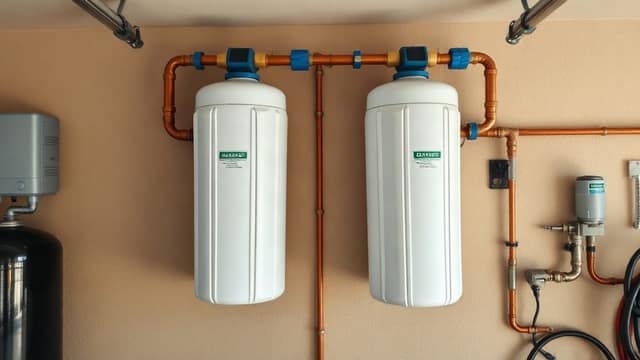 Whole House Water Filtration SystemEight whole house water filters compared by rated flow in GPM, capacity in gallons
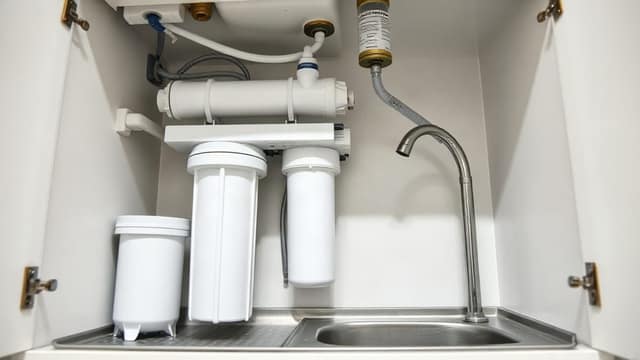 Reverse Osmosis System for HomeEight reverse osmosis systems compared by NSF-listed output, drain water, feed pressure and certification
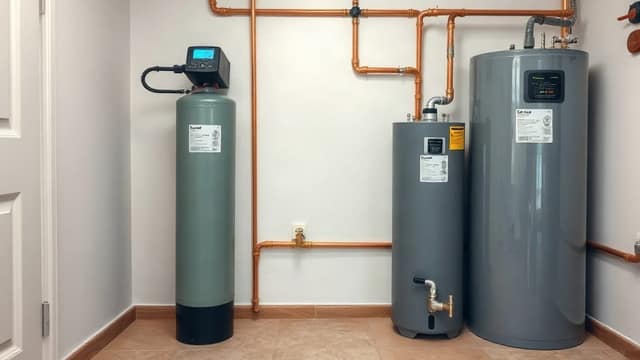 How Much Does a Water Softener Cost? Price GuideSalt, rinse water, power, warranty years and install work counted in pounds