People search "hard water vs soft water" when they hold a lab number, a scaled kettle or a salesperson's pitch and want to know what really changes. Most of the difference is chemistry you can measure, and some of what is sold with it is not proven. This page sets the two side by side in gpg, mg/L and milligrams of sodium, shows how to find your own figure, and finishes with a verdict by profile and a short list of models for each choice. Every figure carries its source, conflicting numbers are shown side by side, and there are no prices, only buttons that lead to current listings.
What is the difference between hard and soft water?
Water check
Hard water holds more dissolved calcium and magnesium. USGS calls water soft at 0 to 60 mg/L as calcium carbonate and hard above 120 mg/L. Soap scum and scale both follow from that one number.
USGS explains that hardness comes from calcium and magnesium dissolved as water passes through soil and rock, and that soap reacts with calcium to form scum. The bands differ slightly by source.
| Class | Penn State, gpg | Penn State, mg/L | USGS, mg/L as CaCO3 | What you usually see |
|---|---|---|---|---|
| Soft | under 1.0 | under 17 | 0 to 60 | Soap lathers easily |
| Slightly hard | 1.0 to 3.5 | 17 to 60 | inside "soft" | Little trouble |
| Moderately hard | 3.5 to 7.0 | 60 to 120 | 61 to 120 | Light film on glass |
| Hard | 7.0 to 10.5 | 120 to 180 | 121 to 180 | Kettle and heater scale |
| Very hard | over 10.5 | over 180 | over 180 | Heavy scale and spotting |
Penn State Extension puts one grain per gallon at about 17 mg/L and says water below 7.0 gpg "will probably not cause major scaling and soap film". WHO uses the same four bands as USGS, while Vermont's health department draws its lines higher, with hard starting at 151 mg/L. Convert any report with the water hardness converter; the full definition is in what is hard water.
What makes water hard or soft?
Rock does. Water that touches limestone or chalk picks up calcium and magnesium, so hardness reflects where the water has been, not how your tap treats it.
WHO names sedimentary rocks, soil seepage and runoff as the principal natural sources, and says groundwater supplies often meet significant hardness.
Are distilled water, rain water and spring water hard or soft?
Distilled and rain water are soft; spring water can be either. Distillation removes minerals, rain falls nearly mineral-free, and spring water has crossed rock, so it often arrives hard.
WHO calls rainwater soft and usually slightly acidic. Vermont adds that slightly acidic rain dissolves calcium from limestone underground. WHO also notes that naturally soft water can corrode pipes unless a utility conditions it, so soft is not automatically better.
How do you know if you have hard or soft water?
Water check
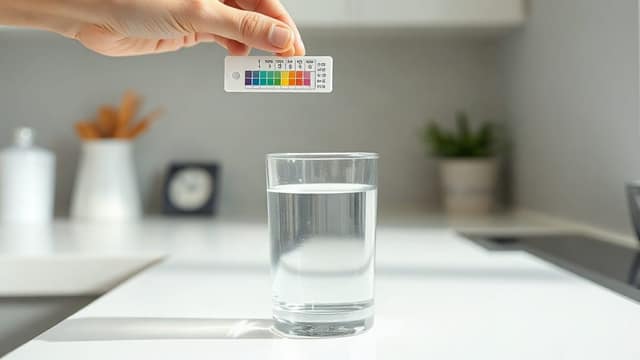
Read your utility's yearly report, or test: strips read 0 to 425 mg/L in minutes, and a drop kit gives gpg. Scale on the kettle and scum in the tub are the free early clues.
City suppliers publish a yearly water quality report, and EPA's Consumer Confidence Report page shows how to find yours. Private wells are not covered: EPA says owners test their own water, and Vermont advises a hardness test every five years.
| Method | What it tells you | Range and effort | Weak point |
|---|---|---|---|
| Utility report | Your supplier's average | Free, 5 minutes | Units vary; blending hides local swings |
| Test strip | Rough class | Hach strips: 0 to 425 mg/L, 50 tests | Color match; no accuracy figure printed |
| Drop kit | A gpg number | Hach 5-B: 1 gpg per drop | Counting drops carefully |
| State-certified lab | Hardness plus iron | Mail a sample, wait days | Slower; best for wells |
| Signs at home | Hard or not, not how hard | Free | Depends on soap and heat |
Hach says strips suit a general range and titration suits an exact value (Hach hardness page). See how to test water hardness at home and signs of hard water. For a quick check, the Hach strips 2745250 are a 50-test option.
Can you feel the difference between hard and soft water?
Sometimes, but a feel is not a measurement. Hard water leaves a film and soap lathers less; soft water can feel slick because no scum is left on the skin.
PNNL says hard water reduces lather and that soap reacts to form a sticky coating on skin (PNNL guide). Use a strip or a report for the number.
Is my water hard or soft by ZIP code?
A ZIP-code map gives a starting range, not your number. USGS says hard water is common in the east-central and western US and warns against using national data for one home.
The water hardness map and ZIP code lookup shows regional ranges and how to refine them.
Is city, tap or well water hard or soft?
Water check
It depends on the source. New York City averages about 1.8 gpg (soft), Seattle's Cedar River water read about 1.5 to 1.7 gpg, and private wells are often harder. Read your own report, not a state average.
Tap water is whatever your utility delivers:
- New York City: the Department of Environmental Protection gives a citywide average of about 1.8 gpg, Croton water moderately hard, Catskill and Delaware water soft or slightly hard, and blended areas up to 7 gpg (NYC DEP FAQs). So NYC water is soft, with local exceptions.
- Seattle: Seattle Public Utilities' May 2026 analysis lists 1.73 gpg at the Cedar treatment plant outlet and 1.55 gpg at one distribution point (SPU analysis). That is soft.
- Chicago: we found no city-published figure. Softener sellers' pages range from about 7.5 to 17.6 gpg, so we print none. Read the city's yearly report for your address.
For Houston, Dallas, Boston, Los Angeles, Florida, Texas, Colorado and other places the same rule applies: the supplier's report beats any claim about a state, and the water hardness map lists regional ranges. Other countries are outside this US site.
Is well water hard or soft?
Often hard. Groundwater dissolves minerals along its path, and WHO says calcium above 100 mg/L is common in groundwater. Nobody tests a private well for you, so do it.
Iron changes softener sizing: add 4 to 5 gpg per ppm of iron, depending on the maker. See is well water hard water and the best water softener for well water.
Hard water vs soft water: the side-by-side table
Water check
Fourteen rows cover minerals, sodium, soap, scale, taste, skin, plants, infants and upkeep. Soft water wins on scale and soap; hard water wins on sodium and on keeping calcium and magnesium.
"Soft" here means water softened by a salt-based ion-exchange unit, which is what most homes buy. Naturally soft water has no sodium added.
| Row | Hard water (about 10 gpg, 170 mg/L) | Softened water (about 0 gpg) |
|---|---|---|
| Calcium and magnesium | 120 to 180 mg/L as CaCO3 | Near zero, replaced by sodium |
| Sodium added | None | About 7.5 mg per quart per gpg removed: 75 mg per quart at 10 gpg |
| Soap and detergent | More needed; scum and curds | Lathers readily |
| Scale in heater and pipes | Builds on heating surfaces | Minimal |
| Kettle and glassware | White crust, spots | Mostly clear |
| Taste | Minerals taste refreshing to many (Penn State) | Mostly neutral; WHO says mineral-free water tastes flat |
| Skin and eczema | More soap residue in one 80-person study | No extra benefit in a 336-child trial |
| Hair | Film is common talk | No trial found either way |
| Plants | Fine | Sodium builds up in pots |
| Infant formula | Normal preparation | ASPEN says softened water is not appropriate |
| Low-sodium diet | No concern | Ask your doctor; keep a tap unsoftened |
| Upkeep | Descale kettles and coffee makers | Salt bags, resin, a drain line |
| Water used | None extra | About 50 gallons per regeneration (Penn State) |
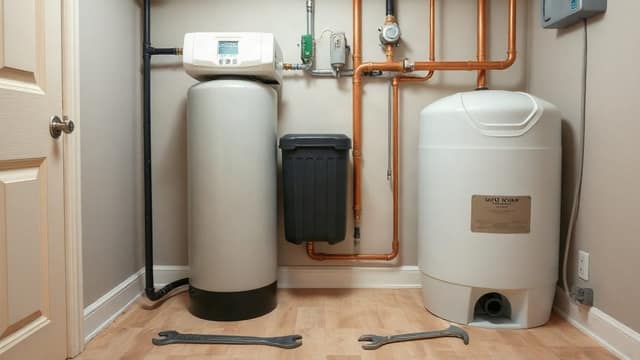
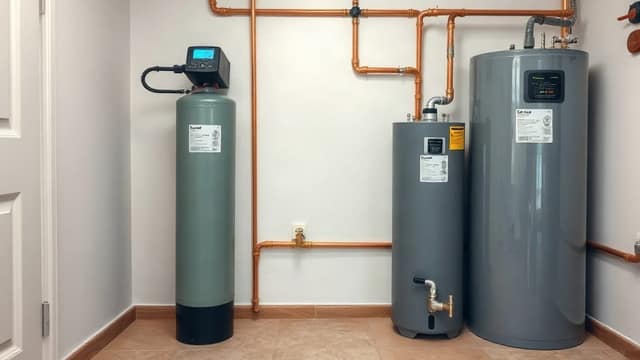
| Equipment | None | Tank, brine tank, drain line; no prices here |
Sources: Penn State, USGS, WHO and the studies cited below.
What does hard water do to a home that soft water does not?
Water check
It leaves scale and scum. Heated hard water drops calcium carbonate on heating elements, which Penn State says can shorten a water heater's life, and soap reacts with calcium to form scum instead of lather.
USGS says scale can raise heating costs, cut the efficiency of electric water heaters and narrow pipes over time. Vermont gives an industry rule of thumb of 120 to 170 mg/L (7 to 10 gpg) as the most a household should live with. So the case for softening is strong above about 10 gpg and weak under 5.
Take a household of four on 15 gpg water, with Penn State's 75 gallons per person per day: 4 x 75 x 15 = 4,500 grains a day, so a 32,000-grain softener regenerates about every 7 days (32,000 divided by 4,500 is 7.1). The what size water softener do I need guide and the size calculator run that sum for you, and how does a water softener work explains the resin. Damage details are in hard water problems and damage to pipes and appliances.
Which is better, hard water or soft water?
Water check
Neither wins across the board. Soft water saves scale and soap; hard water keeps calcium and magnesium and adds no sodium. Vermont says hard water is not a health risk and that no health standard for hardness exists.
The answer depends on your hardness, your sodium limit and what you want to fix.
Is hard water better than soft water?
For health, no proof either way; for the house, soft is easier on heaters and soap. WHO calls calcium and magnesium essential, but food is the main source of both.
WHO cites typical recommended intakes of about 1,000 mg of calcium and 200 to 400 mg of magnesium a day, and estimates of 2.3 mg of magnesium a day from soft water against 52.1 mg from hard water at 2 liters. Vermont puts 8 oz of moderately hard water at 50 to 75 mg of calcium, against about 300 mg in milk.
WHO also reviewed heart disease studies: most were ecological studies reporting an inverse link with cardiovascular death, a design WHO says limits conclusions, and two cohort studies on total hardness found no association. See is hard water bad for you.
Is soft water better than hard water?
For soap, scale and spotting, yes. For drinking it depends on sodium: a salt softener adds about 7.5 mg per quart for each gpg removed, so the hardest water ends up saltiest.
The trade is sodium for scale. Naturally soft water adds none. See can you drink softened water.
Is it better to drink hard water or soft water?
Either is fine for most adults. Hard water tastes mineral and adds a little calcium and magnesium; softened water adds sodium. People on a sodium limit should drink from an unsoftened kitchen tap.
Penn State calls risk for low-sodium diets "the major disadvantage" of softening, and Vermont says the kitchen cold faucet can bypass the softener. Softening also does not clean water of serious contaminants, says Penn State.
Is soft or hard water better for showering?
Soft water rinses soap off more easily. For skin the evidence is weaker than the advertising: one trial found no extra eczema benefit, and a smaller study tied hard water plus detergent to more irritation.
The Softened Water Eczema Trial enrolled 336 children in hard water areas. At 12 weeks the softener group improved 5.0 points on SASSAD against 5.7 for usual care, and the authors found no additional benefit (Brighton record; UCL summary). A 2018 study of 80 people found hard water left more detergent on skin and raised irritation, most in people with a filaggrin mutation (PubMed); its authors call for an intervention study, and a water softener company is among its funders (Sheffield record). More in hard water skin and hair effects and do shower head water softeners work.
How can you turn hard water into soft water?
Water check
Only ion exchange, a salt softener, removes hardness from a whole house. Salt-free conditioners do not remove it, reverse osmosis treats one tap, and boiling clears only the temporary kind.
| Method | Removes hardness? | Covers | Catch |
|---|---|---|---|
| Salt-based softener | Yes, to near 0 gpg | Whole house | Adds sodium; uses salt and water |
| Salt-free conditioner | No; changes scale | Whole house | Strip test unchanged |
| Reverse osmosis tap | Yes, at that tap | One faucet | Hard water scales the membrane |
| Boiling | Temporary hardness only | One pot | Nothing for permanent hardness |
| Distillation | Yes | One batch | Slow; mineral-free |
Water softening methods compared and how to treat hard water at home go deeper. For a whole house, start with the best water softener.
Can boiling make hard water soft?
Only partly. Boiling in an open pot precipitates temporary (bicarbonate) hardness as scale, but hardness from chloride or sulfate stays.
A chemistry reference says permanent hardness cannot be fixed by boiling and needs the ions removed (Chem1). We found no extension page measuring a home kettle's effect.
Do baking soda, salt or bath salts soften hard water?
We found no reliable source showing they do. Softening means removing or swapping calcium and magnesium, as Penn State describes, and a spoon of salt or soda in a bath does neither.
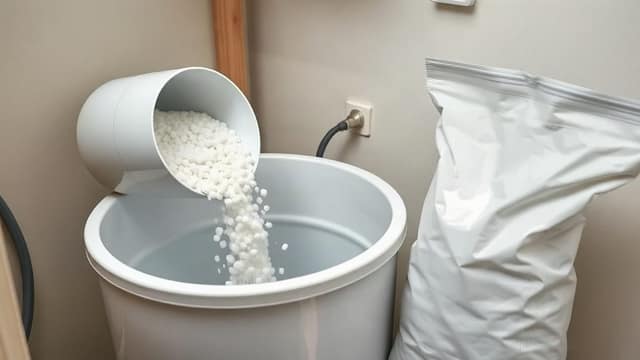
A softener uses salt only to recharge its resin. If a product claims otherwise, ask for a test report. This is absence of a source, not proof.
Does reverse osmosis or a filter soften hard water?
Reverse osmosis removes dissolved minerals at the tap it feeds, but hardness scales the membrane; AquaTru gives a 10 gpg limit. An ordinary filter is not built to soften.
Vermont warns that hardness scales RO membranes and can cut RO and UV efficiency, so softening may come first. See water softener vs water filter and best reverse osmosis system.
Can you make soft water harder?
Yes, by blending or adding minerals back. Penn State lists mixing softened and unsoftened water to a chosen hardness as an advantage, and some RO units add a remineralizing stage.
WHO notes bottlers often add minerals because demineralized water tastes flat. A bypass or a separate drinking tap is the simplest route.
Who should keep hard water or avoid softened water?
Water check
Anyone on a sodium limit, anyone mixing infant formula and anyone watering potted plants from a softened tap. A 10 gpg supply adds about 75 mg of sodium per quart, far above the 20 mg/L Vermont cites for a 500 mg daily limit.
The sum: 7.5 mg per quart per gpg times 10 gpg is 75 mg per quart, about 19 mg in 8 oz. Vermont gives the same ratio as 0.46 mg of sodium per mg of hardness removed, and 170 mg/L x 0.46 is about 78 mg/L. The general adult limit is 2,300 mg a day (Dietary Guidelines for Americans 2025 to 2030), so one glass is small, while very hard water at 30 gpg adds far more.
Plants lose too. NMSU's extension says sodium builds up in potting soil as water evaporates, and the easiest fix is a faucet on unsoftened water (NMSU).
What about softener settings, salt, installation and cost?
Water check
Set a softener to your tested hardness in gpg, adding 4 to 5 gpg per ppm of iron. Each other softener question has its own guide, so this page stays on hard against soft.
- Hardness setting: water softener settings, hardness and programming.
- Cost and replacement: water softener cost guide and when to replace a water softener.
- Installation difficulty: water softener installation guide.
- Hardened salt: water softener maintenance checklist.
- Septic systems: Penn State warns regeneration uses about 50 gallons per cycle, which may overload a drainage field; see water softener for septic systems.
- Salt or salt-free: salt vs salt-free water softener.
Hard water vs soft water: the verdict by profile
Water check
Soften above about 10 gpg if nobody has a sodium limit; keep hard water under 7 gpg, on a low-sodium diet, or where infants and plants are the main users. In between, add a drinking tap.
| Your situation | Choose | Why |
|---|---|---|
| Under 3.5 gpg | Nothing | Already soft |
| 3.5 to 7 gpg, kettle scale | Descale, or a salt-free unit | Light scale; no sodium |
| 7 to 10 gpg, tankless heater | Conditioner or softener | The heater is the target |
| Over 10 gpg, family of four | Salt-based softener | 4,500 grains a day at 15 gpg |
| Low-sodium diet | Softener plus unsoftened or RO tap | Keeps sodium out of drinking water |
| Infant formula | Unsoftened or RO water | ASPEN advice; ask pediatrician |
| Well with iron | Treat iron first | Iron fouls resin |
| Potted plants | Bypass the outdoor tap | Sodium builds in soil |
Choose softened water if…
Your tested hardness is above about 10 gpg, scale shows on heaters and fixtures, and nobody must limit sodium.
Size from people x 75 gallons x gpg, and keep one tap unsoftened. See how much salt does a water softener use.
Keep hard water if…
Your water tests under 7 gpg, you limit sodium, you mix infant formula, or kettle scale is the only complaint.
Vermont says hard water is not a health risk. If scale is the only pain, read water descaler vs water softener.
Which softeners, conditioners and drinking taps fit each side?
Water check
Three salt softeners (7.2 to 11 GPM) soften a whole house; one conditioner (12 GPM listed) keeps minerals and cuts scale; two RO taps give mineral-free drinking water. No prices here: use the buttons.
Figures come from maker pages and manuals read in November 2026.
| Model | Type | Capacity or flow | Certification found | Note |
|---|---|---|---|---|
| SpringWell SS1 | Salt softener | 32,000 grains, 11 GPM (size guide says 9) | None in NSF or WQA | 1 in ports |
| Rheem RHS32 | Salt softener | 32,000 grains (33,000 at top dose), 7.9 GPM | NSF/ANSI 44 efficiency rated | Manual prints three salt doses |
| EcoPure EP31 | Salt softener | 31,000 grains, 7.2 GPM | NSF/ANSI 44 listed | Tight for 3 baths |
| SpringWell FS1 | Salt-free | 12 GPM (guide says 9), 75 gpg limit | No scale listing found | Zero iron allowed |
| iSpring RCC7AK | RO tap | 75 GPD rated; 21.04 gpd NSF-listed | NSF/ANSI 58, TDS only | 45 to 70 psi |
| AquaTru Classic | RO counter | 0.75 gal tank, 10 gpg limit | Maker says IAPMO; not in NSF | 120 V outlet |
Make it soft: SpringWell SS1, Rheem RHS32 and EcoPure EP31
For one to four people on 10 to 15 gpg water, 32,000 grains is the usual size. The RHS32 and EP31 hold NSF/ANSI 44 listings; the SS1 has none we found but flows 11 GPM.
The SS1 runs 25 to 80 psi. The Rheem RHS32 manual prints 13,000 grains at 2.6 lb of salt and 33,000 at 14.1 lb. The EcoPure EP31 manual lists 7.2 gpm.
Best for: SS1, 1 to 3 bathrooms; RHS32, printed ratings. Not for: any of them on a well with sulfur smell or several ppm of iron.
Keep it hard, control the scale: SpringWell FS1
The FS1 is a salt-free conditioner for city water with no iron. It does not remove hardness, and the best scale evidence is a lab study that did not name its devices.
SpringWell's table lists 20 to 80 psi and 0 ppm iron. In the WateReuse and Arizona State study one TAC device cut heater scale 89 to 97 percent and magnetic units about half (project 08-06). See best salt free water softener.
Best for: a tankless heater on soft-to-moderate city water. Not for: anyone wanting lather or spot-free glass.
Keep minerals out of drinking water: iSpring RCC7AK and AquaTru Classic
An RO tap solves the sodium problem for drinking only. The RCC7AK needs 45 to 70 psi under the sink; the AquaTru Classic sits on the counter.
NSF lists the RCC7AK base model at 21.04 gpd for TDS reduction (NSF); AquaTru's FAQ gives 75 percent efficiency and a 10 gpg limit. See do you need a water softener with reverse osmosis.
Best for: a sodium-limited household drinking from one tap. Not for: AquaTru Classic on water above 10 gpg without a softener first.
6 common mistakes when choosing between hard and soft water
Water check
The costliest mistakes are buying before testing, sizing from a label, softening the drinking tap in a low-sodium home and expecting a salt-free unit to change a strip test.
Buying a softener without a hardness number
Under 7 gpg it buys little. Test first.
Treating a salt-free conditioner as a softener
It changes scale, not hardness: the strip stays the same color.
Softening the kitchen tap for a sodium-limited household
At 10 gpg the water carries about 75 mg of sodium per quart. Keep one tap unsoftened.
Mixing infant formula with softened water
ASPEN advises against it. Use unsoftened or RO water.
Ignoring iron on a well
Add 4 to 5 gpg per ppm of iron, and treat iron above a few ppm first.
Watering potted plants from the softened line
Sodium builds up in the pot. Water from an unsoftened tap.
Frequently asked questions
Which is better for you, hard or soft water?
Neither is proven better for health. Vermont says hardness is not a health risk; hard water adds some calcium and magnesium, softened water adds sodium. Choose by your number and your sodium limit.
What is hard and soft water in simple terms?
Hard water has more dissolved calcium and magnesium, above 120 mg/L (7 gpg). Soft water has under 60 mg/L (3.5 gpg). You see it as scale, scum and how soap lathers.
What hardness counts as hard water?
USGS says 121 mg/L and up, about 7.1 gpg. Penn State's hard band starts at 7.0 gpg and very hard at 10.5.
Does a water softener make water soft?
A salt-based softener does, to near 0 gpg, by swapping calcium and magnesium for sodium. A salt-free conditioner does not remove hardness.
Is NYC water hard or soft?
Soft. NYC DEP gives a citywide average of about 1.8 gpg, with blended areas up to 7 gpg.
Is Seattle water hard or soft?
Soft. Seattle Public Utilities' May 2026 analysis reads 1.73 gpg at the Cedar plant outlet and 1.55 gpg at a sampling point.
Is it worth softening 5 gpg water?
Usually not for scale. Penn State says water under 7.0 gpg will probably not cause major scaling and soap film.
Does soft water use less soap?
Yes. WHO says hard water takes considerably more soap to lather, and it leaves scum.
Does a softener remove chlorine, lead or bacteria?
No. Penn State says softeners will not necessarily remove serious contaminants. Use a certified filter or RO tap and test the water.
Is soft water bad for plants?
For potted plants watered only from a softened tap it can be, as sodium builds up. NMSU suggests an unsoftened faucet.
Can you drink hard water every day?
For most people, yes. Vermont says hard water is not a health risk and can add calcium and magnesium. Test wells for contaminants separately.
Does hard water taste different from soft water?
Often. Penn State says minerals give a refreshing taste many like, while WHO says demineralized water tends to taste flat.
How we researched this page
Water check
We read the USGS, Penn State, PNNL, WHO, Vermont health department and NYC DEP pages, the NMSU plant note, maker pages and manuals, and the NSF database on November 17 and 18, 2026. We have not tested any system.
Not confirmed: we read the 2018 skin study only as an abstract and records; the Seattle figures came from a search result, not a fully opened document; Chicago has no city-published figure we could find; we found no source on baking soda, salt or bath salts; SpringWell flows differ between its table and size guide (SS1 11 vs 9 GPM, FS1 12 vs 9). IAPMO and WQA records could not be queried by our tools, and CDC pages refuse automated readers. No prices are printed.
Sources
Our sources by topic
Public agencies and universities
- USGS, Hardness of Water; WHO, Hardness in Drinking-water; Vermont Department of Health, Hardness in drinking water.
- Penn State Extension, Water Softening; PNNL, Water Softeners; NMSU, Southwest Yard and Garden; Chem1, Water hardness.
- NYC DEP, Drinking water FAQs; Seattle Public Utilities, quarterly analysis, May 2026.
- EPA, Consumer Confidence Reports and private wells; Dietary Guidelines 2025 to 2030; Health Canada, potassium and softeners; ASPEN, infant formula statement.
- Softened Water Eczema Trial, Brighton and UCL; J Invest Dermatol 2018 and Sheffield record; WateReuse, project 08-06.
Manufacturers, retailers and other references
- Hach, strips, 5-B kit, hardness page.
- Makers: SpringWell salt-based and salt-free; Rheem RHS32 manual; EcoPure EP31 manual; AquaTru FAQ; NSF database.
Keep comparing
 Water Hardness Test Kits and StripsTen water hardness tests compared by range in ppm and gpg, tests per pack
 Water SoftenerEleven water softeners sold in the US compared by grains, GPM, salt use and certification
 Salt-Free Water SoftenerEight salt-free water conditioners compared by flow in GPM, hardness limit in gpg
 Water Softener InstallationPipe sizes, bypass, drain air gap, psi limits, first regeneration, DIY or plumber
 How Much Does a Water Softener Cost? Price GuideSalt, rinse water, power, warranty years and install work counted in pounds
 Water Softener SaltTen water softener salts in 40 lb bags compared by form, stated purity, iron additive and NSF listing