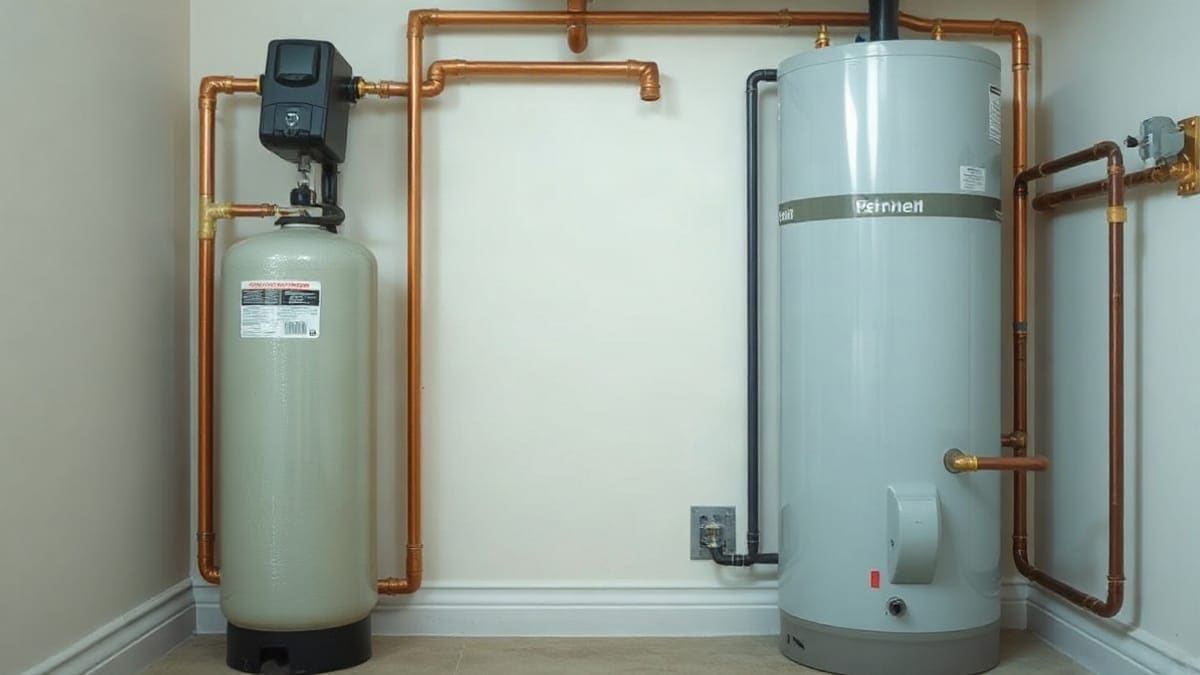
iSpring Water Systems sells reverse osmosis, whole-house filters, a spin-down sediment filter, an electronic descaler and a salt softener. It is a mid-size direct brand, not a name from the plumbing trade, so the useful question is what each product has been shown to do. We read iSpring's product, warranty and support pages, its NSF listings and the federal recall database on November 18, 2026. The sections below start with who iSpring is, then walk the range, the certifications, the warranty, three competitors and the cases where another brand is the better buy. This page prints no prices. Buying through a link here pays this site a commission and costs you nothing extra.
Who is iSpring Water Systems, and is it an American company?
Water check
iSpring Water Systems LLC is based in the Greater Atlanta area of Georgia and sells mainly direct. Its own About page says it was founded in 2007, other sources say 2005 or 2006, and most of its products are built in Taiwan and China.
iSpring's About page says the company is based in Greater Atlanta, gives 2007 as the founding year and claims to sell in 21 countries. Directories date it earlier, and older ones place the head office in Alpharetta, while a 2026 press release is datelined Cumming, Georgia. We could not settle the exact city or year from the pages we read, and neither matters much for a purchase. What matters is that the company is a Georgia LLC with U.S. phone support, listed as such in the NSF database. iSpring's FAQ puts the support line at (678) 261-7611, open Monday to Friday, 9 to 5 Eastern.
So yes, it is an American company, in the sense of a U.S.-based seller with U.S. support. It is not an American manufacturer, which the next section covers. This site earns a commission when you buy through our links. Where a competitor does the job better, we say so below.
Where are iSpring water systems made?
Water check
iSpring says most of its products are made in Taiwan and China and some in the U.S. The NSF listing names three plants for its 14 reverse osmosis models: Taichung City in Taiwan, Fujian in China and Nanjing in China.
The FAQ states: "Most of our products are made in Taiwan and China. Some are made in the US." The NSF record is more precise for the models it covers. Each listing row carries a facility, and we read all 14 on the list dated November 17, 2026.
| NSF facility | Models on the list | Rate listed | Claims listed |
|---|---|---|---|
| Taichung City, Taiwan | RCC7, RCC7AK, RCC7AK-UV | 21.04 gpd | TDS reduction |
| Fujian, China | RO500-BN, RO500-ORB, RO500AK-BN, RO500AK-ORB | 500 gpd | TDS reduction |
| Nanjing, China | RCC7-BLK, RCC7-BN, RCC7AK-BLK, RCC7AK-BN, RCC7AK-UVBLK, RCC7AK-UVBN, RCC7UV | 25.41 gpd | TDS plus asbestos, barium, cadmium, trivalent chromium, copper, fluoride, lead, selenium |
Two lessons come out of the table. First, a plant in Nanjing, a plant in Fujian and a plant in Taichung produce what the brand sells as one RCC7 family, and the three do not carry the same claims. Second, no U.S. plant appears for any listed model. If "made in the USA" matters to you, iSpring does not offer it on the models we could trace. Where a model is built is not a quality verdict: the certification and the warranty tell you more.
Which products make up the iSpring range?
Water check
iSpring sells at least 14 reverse osmosis models from 75 to 4,000 GPD, plus 2-stage and 3-stage whole-house filters, an iron filter, a spin-down prefilter, a descaler, a 45,000-grain softener and 3-stage under-sink filters.
The range below is limited to products we found on iSpring's own pages on November 18, 2026. iSpring's site shows a long catalog with many suffixes for finishes, UV add-ons and filter packs, and we group the suffixes under the base model.
| Group | Models we read | Rating from iSpring |
|---|---|---|
| Under-sink reverse osmosis, tank | RCC7AK, RCC7AK-UV, RCC1UP-AK | 75 GPD, 75 GPD with UV, 100 GPD with pump and UV |
| Under-sink reverse osmosis, tankless | RO500AK-BN and RO500AK-BN+UVF8 | 500 GPD, up to 2:1 pure to drain |
| Countertop reverse osmosis | RCD100 and its hot and cold versions | 100 GPD, 2.5:1, 5 stages, UV |
| Whole-house filter, cartridge | WGB21B, WGB32B and its -PB, -KS, -KDS and -PF variants | 1 in ports, up to 15 GPM on the WGB32B |
| Whole-house filter, backwash tank | WF150K and WF150K-PF | 3 or 5 to 10 years of media life, valve with backwash |
| Well water | WCFM500K iron filter, WSP spin-down prefilter, UVF55FS UV | iron up to 12 ppm on the WCFM500K |
| Hardness | ED2000 descaler, WCS45KG softener | descaler to 25 gpg, softener 45,000 grains |
| Under-sink filter | US31, US31-PF, US31-BV, US31KF | 3 stages, filter life 1,500 to 10,000 gallons by suffix |
We did not find a current iSpring shower filter on the pages we read, so this page does not rate one. The brand's replacement-cartridge business is a large part of its range, and Section "How often do iSpring filters need changing?" below covers the intervals.
Which iSpring reverse osmosis system should you pick?
Water check
Pick by feed pressure and outlet access: the RCC7AK needs 45 to 70 psi and no power, the RCC1UP-AK works from 30 psi with a pump and UV, and the RO500AK-BN works from 15 psi, makes 500 GPD and has no tank.
Here are the three under-sink systems that most buyers choose, with the figures iSpring publishes. Read the limits column before the output column.
| Model | Format | Rated output | Feed pressure | Drain ratio claimed | Power |
|---|---|---|---|---|---|
| RCC7AK | Tank, 6 stages | 75 GPD | 45 to 70 psi | 1 pure to 3 drain (the RCC7AK page says up to 1 to 2) | None |
| RCC7AK-UV | Tank, 7 stages, 11 W UV lamp | 75 GPD | 45 to 70 psi | not stated on the page read | UV lamp |
| RCC1UP-AK | Tank, pump, 7 stages, UV | 100 GPD | 30 to 70 psi | 1 pure to 1.5 drain (the RCC7P-AK page prints up to 1.5:1) | Pump, plug-in |
| RO500AK-BN | Tankless, 3 filter stages, pump | 500 GPD | 15 to 70 psi | up to 2 pure to 1 drain | Pump, plug-in |
iSpring RCC7AK: the classic with no electricity
The RCC7AK is a 6-stage system rated at 75 GPD, with a 5 micron first stage, a 40 to 100°F water range and a 750 ppm TDS limit on iSpring's pages. The ratios and pressures come from the RCC1UP-AK comparison page. iSpring's FAQ for the UV sibling describes a 3.2 gallon tank, which fits a household of four. The RCC7AK-UV page says to replace the UV bulb yearly. Our RCC7AK review goes deeper.
iSpring RCC1UP-AK: the pump model for low pressure
iSpring says the booster pump gives up to 50% faster tank fill and up to 50% less wasted water than pumpless models, and a flow sensor switches the UV lamp on and off with a 3 minute delay. It lists 30 to 70 psi, 40 to 100°F and 750 ppm maximum TDS. It is not on the NSF/ANSI 58 list, so its claims are maker claims. See the RCC1UP-AK review.
iSpring RO500AK-BN: the tankless one
The RO500AK-BN page lists 500 GPD, up to 0.4 gallons per minute, an 8 oz cup in 10 seconds, three filter stages with an alkaline stage at the end, 17.5 x 5.12 x 16.25 in and 25 lb. The membrane is rated for 2 to 3 years and the first-stage composite filter for about a year. If the system sits idle for 24 hours it rinses the membrane for 20 seconds. The "up to 2:1" ratio is a best case, not a fixed figure.
Drain water is the cost to watch. At 4 gallons of drinking and cooking water a day, the ratios above mean about 12 gallons to the drain from the RCC7AK (8 if its page's "up to 1:2" holds), 6 from the RCC1UP-AK and 2 from the RO500AK-BN, or about 4,380, 2,190 and 730 gallons a year. Those are best-case maker ratios, and iSpring names no test behind them. Our reverse osmosis cost and what is reverse osmosis pages explain the drain side.
The RCD100 is a different animal: a 5-stage countertop unit rated 100 GPD at 2.5:1, with UV and a hot-water option, for city water at 41 to 100°F. Its listing quotes an SGS test with 97.6% TDS removal. SGS is a lab, so that is a test result, not an NSF listing. For the counter format compare the best countertop reverse osmosis system.
Best for: a household that wants a plain under-sink system with a database listing. Not for: someone who cannot drill the sink or has no cabinet outlet for the RO500AK-BN. Check price on Amazon
What do iSpring's NSF/ANSI 58 listings actually say?
Water check
The NSF/ANSI 58 list shows 14 iSpring models, and every one is reverse osmosis. The base RCC7AK is listed at 21.04 gpd for TDS reduction, the RCC7AK-BN at 25.41 gpd with eight metal claims, and the RO500AK-BN at 500 gpd for TDS.
We queried the NSF drinking water treatment unit database for iSpring under NSF/ANSI 58. The listing is dated November 17, 2026 and counts 14 products, all marked "Plumbed-In to Separate Tap". The same company name returned no products on NSF/ANSI 53, NSF/ANSI 42 or NSF/ANSI 44, the standard for softeners.
| Listing | Rate (gpd) | What NSF lists | What it does not list |
|---|---|---|---|
| RCC7AK, RCC7AK-UV, RCC7 | 21.04 | TDS reduction | lead, fluoride, PFAS |
| RCC7AK-BN, -BLK, -UVBN, -UVBLK and others | 25.41 | TDS, lead, fluoride, copper, barium, cadmium, chromium, selenium, asbestos | PFAS, nitrate |
| RO500AK-BN and the other RO500 rows | 500 | TDS reduction | lead, fluoride, PFAS |
| RCC1UP-AK, RCD100 | none found | nothing | everything |
Why is the listed output 21.04 gpd when iSpring says 75 GPD?
The 75 GPD figure is the membrane's rating on iSpring's pages. The listed 21.04 gpd is the production rate NSF recorded for the system, which is 28% of the advertised figure. We did not find the test conditions on the pages we read, so we cannot say what pressure or temperature produced the difference. For planning, use the lower number: Penn State puts drinking and cooking water at about 1 gallon per person per day, so 21 gpd still covers a family of four several times over, but it is not the 75 the box implies.
What is the difference between "NSF certified" and "tested to NSF standards"?
A listing is a certificate held by a certifier. "Tested to" or "SGS tested" means a lab ran a protocol and reports a result. Both can be honest, but only the first appears in the database. iSpring's whole-house cartridges say the carbon is "tested by a third-party to meet NSF/ANSI standards", and iSpring's PFAS filters say SGS tested them to reduce up to 99% of PFOA and PFOS. We found no listing behind either claim, so read them as lab reports to ask for.
Does an iSpring reverse osmosis system remove PFAS and lead?
Water check
On the NSF list, the RCC7AK-BN family lists lead reduction, and no iSpring row lists PFAS. iSpring's pages for newer systems say they reduce PFAS, which is a maker claim. EPA's limit for PFOA and PFOS is 4.0 parts per trillion.
EPA's PFAS drinking water page sets enforceable limits of 4.0 ppt for PFOA and PFOS, with utility compliance in 2029 under the April 2024 rule; a May 18, 2026 EPA proposal (not final) would allow extensions to 2031 and rescind the limits for four other PFAS. A 4.0 ppt target is very low, and few home filters publish a result at that level. If PFAS is your reason to buy, look up your utility's report on the EPA water quality report page, ask iSpring for the SGS report of your exact model, and compare our best water filter for PFAS and best water filter for lead pages. For lead, the table above is the clearest evidence iSpring has: the Nanjing-built BN, BLK and UV versions list it, and the base RCC7AK does not.
Which iSpring whole-house filter is worth considering?
Water check
The WGB32B is a 3-stage cartridge system with 1 in ports, listed up to 15 GPM and 25 to 80 psi, and iSpring rates its sediment stage at 100,000 gallons. It reduces chlorine, sediment and odor, but it does not soften water and has no NSF listing.
The WGB32B page lists 20 x 4.5 in cartridges, a 5 micron sediment stage, two carbon block stages and a cartridge set good for up to 100,000 gallons or 6 to 12 months. At the Penn State figure of 75 gallons per person per day, four people use about 300 gallons a day, so a 100,000 gallon cartridge lasts about 333 days, which is why the 12 month change is the real limit. iSpring's own pages say the base system does not reduce hardness or TDS and does not treat bacteria or viruses.
The suffixes change the media: the WGB32B-PB adds a lead-reducing stage, the -KS and -KDS add KDF media, and the -PF versions use SGS-tested PFAS media. The WGB32B review separates them, and our whole house water filter maintenance page covers the schedule.
| Model | Type | Flow listed | Pressure | What to check |
|---|---|---|---|---|
| WGB21B | 2-stage cartridge, 10 in | 1 in ports | not read | smaller housings, lower cartridge capacity |
| WGB32B | 3-stage cartridge, 20 in | up to 15 GPM | 25 to 80 psi | suffix decides the media |
| WF150K | Backwash tank, smart valve | 26 GPM peak, up to 12 GPM service on one FAQ | 35 to 100 psi | ports read 3/4 and 1 in on the same page |
| WF150K-PF | Backwash tank, KDF and catalytic carbon | not stated | not stated | SGS-tested PFAS claim, no listing |
iSpring WF150K: the backwashing tank
The WF150K page lists a smart control valve, KDF55 and coconut shell carbon media, and a design life of 10 years for 2 to 3 bathrooms or 5 years for 4 to 5 bathrooms. Its spec table says a 26 GPM peak flow and a 3/4 in NPT / 1 in NPT connector, while a FAQ on the same page says 3/4 in, and the listed weights conflict (83 and 130 lb). That is the kind of disagreement to settle by phone before you cut pipe. The WF150K-PF page is 11 x 11 x 63.5 in at 120 lb and says SGS tested it for PFAS, with no flow figure. If you need a published flow, compare SpringWell's CF1, which lists 9 GPM and a media life of 1,000,000 gallons or 10 years.
Best for: WGB32B, a city house that wants chlorine and sediment gone at up to 15 GPM. WF150K-PF, a large house that wants a backwash tank and accepts a lab claim. Not for: either one if you need a certification number, hardness reduction or a private well. Check price on Amazon Check price on Amazon
Can iSpring treat well water with iron or hydrogen sulfide?
Water check
The WCFM500K is iSpring's iron filter for wells: it reduces iron up to 12 ppm and manganese and hydrogen sulfide up to 20 ppm, regenerates with air for up to 10 years, and does not reduce TDS or disinfect. Test the water before you buy.
The WCFM500K bundle page lists these limits and a 3 micron sediment stage. It uses air only, with no chemical feed. iSpring states that the system does not disinfect, so unsafe or unknown water needs a UV step such as the UVF55FS and a lab test first. We could not confirm the WCFM500K's own flow rate: the manual of its WCFM550K sibling lists 12 GPM in service and 26 GPM in backwash, and we do not assume they carry over. The WSP spin-down filter takes sand and sediment out ahead of it, listed at 20 GPM with a 1 in male thread.
For comparison, read the best iron filter for well water and best well water filtration system.
Best for: a well with iron and manganese below the listed limits and a lab report in hand. Not for: unsafe water with no disinfection plan, or iron near the limit with no prefilter. Check price on Amazon
Does iSpring make a water softener?
Water check
iSpring sells a 45,000-grain salt softener, the WCS45KG, and an electronic descaler, the ED2000. Only the softener removes calcium and magnesium. We found no NSF/ANSI 44 listing for either one, and the descaler is rated only up to 25 gpg.
The WCS45KG page says 45,000 grains and lists 26 GPM peak flow, while the installation manual gives a rated service flow of 8 GPM and a 20 to 50 psi pressure range against 21 to 64 psi on the product page. Size by the lower figure. iSpring recommends a pre-filter when sediment is present. The ED2000 page says it does not remove calcium or magnesium and tells you to put an iron filter in front if iron is above 0.3 ppm. A limit of 25 gpg is about 428 mg/L on the Penn State conversion of 1 gpg to 17.1 mg/L, so use our water hardness converter on your report.
If your goal is true softening, size the unit with the water softener size calculator and compare the best water softener picks that print NSF/ANSI 44 figures. For descalers read the best salt free water softener page and water softener vs water filter. iSpring bundles the descaler with a filter as the WGB22B + ED2000 set, 1 in ports rated to 15 GPM.
Best for: a home on water below 25 gpg that wants less scale and chlorine reduction in one bundle. Not for: anyone who needs calcium and magnesium removed. Check price on Amazon
Which iSpring model for which case?
Water check
Match the problem to one product: tap-only drinking water, RO500AK-BN or RCC7AK; low pressure, RCC1UP-AK; chlorine and sediment, WGB32B; PFAS claim on a whole house, WF150K-PF; iron on a well, WCFM500K; a cheap tap filter, US31.
| Your case | Take | Why | Check before buying |
|---|---|---|---|
| City water, cabinet outlet, large household | RO500AK-BN | 500 gpd listing, 2:1 best case | outlet and 15 psi minimum |
| City water, no outlet, 45 psi or more | RCC7AK | no power, 75 GPD | 21.04 gpd listed, TDS claim only |
| 30 to 44 psi at the sink | RCC1UP-AK | pump, UV | not in the NSF database |
| Chlorine and sediment in a city house | WGB32B | 15 GPM, 1 in ports | suffix, no NSF listing |
| PFAS claim, whole house | WF150K-PF | KDF and catalytic carbon | SGS claim, no flow figure |
| Iron, manganese, sulfide on a well | WCFM500K | up to 12 ppm iron | lab report, flow |
| Cheapest cartridge at one tap | US31 | 3 stages, filter life by suffix | no NSF listing |
iSpring RCC7AK, RCC1UP-AK and RO500AK-BN
Best for: the RO500AK-BN for a family and an outlet; the RCC7AK for no electricity and 45 psi or more; the RCC1UP-AK for 30 to 44 psi or a well with a UV stage after testing. Not for: a buyer who needs lead or fluoride on the plain model, since the base listings are TDS only. Check price on Amazon
iSpring US31: the cheap under-sink filter
The US31 line is a 3-stage tankless under-sink filter. iSpring lists filter life of 6 to 12 months on the plain model, 1,500 gallons on the US31-BV and 10,000 gallons on the US31KF direct-connect versions. It has no NSF listing, so treat the claims as the maker's. See the best under sink water filter guide.
Best for: a buyer who wants low-cost cartridges and a 12 month cycle. Not for: anyone buying on certification. Check price on Amazon
How does iSpring's warranty and support work?
Water check
iSpring's standard warranty is 1 year from the original purchase date on eligible systems, for defects in materials or workmanship, with lifetime technical support. Extended plans of 3, 5 and 10 years are sold separately, and the 10-year whole-house plan activates when the original term ends.
The support page states the 1 year limited term and says registration verifies the purchase. The extended-warranty page lists whole-house plans of 3, 5 and 10 years and under-sink plans, bought before the original term ends. Free shipping on replacement parts is limited to the 48 contiguous states. Warranty does not cover misuse or operation against the instructions. The RO500AK-BN page adds a 30 day money-back guarantee, and the RCC7AK-UV page a 1 year money-back guarantee. One iSpring FAQ says the WF150K has a 10 year warranty, while other whole-house pages say 1 year, so confirm it for the model you buy. Reviewers also report free extensions through support, which we treat as a case-by-case favor, not a term.
How often do iSpring filters need changing?
Water check
iSpring says RO pre-filters last 6 to 12 months and the membrane 2 to 3 years. The WGB32B cartridge set is rated 100,000 gallons or 6 to 12 months, and the RCC7AK-UV lamp is replaced yearly.
The FAQ gives "6 to 12 months" for the reverse osmosis filters and 2 to 3 years for the membrane. A tap with high sediment or chlorine shortens that. The general schedule for any brand is on our reverse osmosis filter replacement schedule page.
| Part | iSpring interval | Source |
|---|---|---|
| RO pre-filters (stages 1 to 3) | 6 to 12 months | iSpring FAQ |
| RO500AK-BN first-stage composite | about 1 year | RO500AK-BN page |
| RO membrane | 2 to 3 years | iSpring FAQ and RO500AK-BN page |
| RCC7AK-UV lamp | yearly | RCC7AK-UV page |
| WGB32B cartridges | up to 100,000 gal or 6 to 12 months | WGB32B page |
| US31KF filters | up to 10,000 gal | US31KF page |
Before you buy a system, check that its replacement packs exist for years ahead: iSpring sells 1, 2 and 3-year sets, and the RCC1UP-AK sets exclude the membrane.
Is iSpring better than Waterdrop, Express Water, APEC or SpringWell?
Water check
It depends on the job: for a database-listed tank system iSpring and Express Water both appear on the NSF list, for 800 GPD at the lowest drain Waterdrop publishes the best figures, and for whole-house media SpringWell publishes more capacity than iSpring.
We compared maker pages read on November 17 and 18, 2026 and the NSF list. Competitor numbers are maker claims unless stated.
| Brand and model | Output | Drain claim | Feed pressure | Certification we could read |
|---|---|---|---|---|
| iSpring RO500AK-BN | 500 GPD | up to 2:1 | 15 to 70 psi | NSF/ANSI 58, TDS, 500 gpd |
| Waterdrop G3P800 | 800 GPD | 3:1 | 14.5 to 87 psi | no NSF/ANSI 58 row |
| Express Water RO10DX | 100 GPD | 1 to 3 gal per gal | 40 to 80 psi | NSF/ANSI 58, TDS, 21.89 gpd |
| APEC ROES-50 | 50 GPD at 60 psi | not stated | 40 to 85 psi | WQA Gold Seal, maker-stated |
Waterdrop wins on drain ratio and flow but we found no NSF/ANSI 58 row for it (Waterdrop's NSF rows are standard 42 filters), so read our Waterdrop reverse osmosis comparison and Waterdrop review. Express Water is the nearest rival on the paperwork. See the Express Water review. APEC prints a pressure table that makes it the most honest about low-pressure output, and its drain ratio is missing: see the APEC review. For whole-house, SpringWell lists 9 GPM and 1,000,000 gallons on the CF1, and no NSF listing either. See the best reverse osmosis system page for the full eight-way table.
When should you choose a brand other than iSpring?
Water check
Choose another brand if you need a U.S.-built product, a certification for PFAS or lead on a whole-house filter, a softener with a published NSF/ANSI 44 efficiency, or a countertop system you can place without plumbing.
- No plumbing allowed: a renter should look at the best countertop reverse osmosis system, where AquaTru and CovePure sit on the counter.
- Lowest drain water: Waterdrop publishes 3:1 on the G3P800, a better claim than iSpring's best case of 2:1.
- Whole-house capacity: SpringWell publishes 1,000,000 gallons for its carbon media, ten times the 100,000 gallon cartridge rating iSpring prints for the WGB32B.
- Softening: pick from the best water softener list, where models list NSF/ANSI 44 data.
- Full brand comparison: read best water filtration brands and companies, the Culligan consumer water products review and the Culligan reverse osmosis system review.
Has iSpring had a product recall?
Water check
No. A search of the Consumer Product Safety Commission recall database for the product name "iSpring" returned no recalls on November 18, 2026, and no CPSC recall of a reverse osmosis system or whole-house filter was found.
We searched the CPSC recall database for the product name iSpring and got an empty list. The CPSC searches only recalls it has issued, so this is not a clean bill of health: it says nothing about complaints that never reached a recall. Check the water softener recalls page, which we update with each batch of pages.
6 common mistakes with iSpring systems
Water check
Most iSpring problems come from reading the label wrong: planning on 75 GPD when the listing says 21.04 gpd, buying the base model for a lead claim, or sizing a whole-house system on the wrong GPM figure.
Planning on the advertised 75 GPD
The NSF listing for the base RCC7AK is 21.04 gpd, 28% of 75. Plan on the lower number and check the tank size.
Buying the plain RCC7AK for lead or fluoride
Only the BN, BLK and UV-finish rows list lead and fluoride. Read the suffix of the exact model on the listing before you pay.
Installing the RCC7AK under 45 psi
iSpring's pressure range is 45 to 70 psi. Below that, take the RCC1UP-AK with a pump (30 psi minimum) or the RO500AK-BN (15 psi). The FAQ says a booster pump is needed under 45 psi.
Treating "SGS tested" as a certification
An SGS report is a lab result. It is not a listing in the NSF, WQA or IAPMO databases. Ask for the report number and read it.
Putting a WGB32B in front of hard water and expecting soft water
The WGB32B does not reduce hardness. Test hardness first with our water hardness converter and add a softener if needed.
Skipping the lab test on well water
Iron, manganese and sulfide limits are only useful if you know your numbers. EPA tells owners to test private wells themselves.
Is iSpring Water Systems the same as the iSpring software company, and can you use it for free?
No. Two unrelated companies share the name, one selling e-learning software and the other, covered here, selling water filters, reverse osmosis systems and whole house tanks. The water products are bought hardware, and the 1 year limited warranty is described under the warranty section above.
How we researched this page
Water check
We read iSpring's About, FAQ, support, warranty and product pages and its NSF listings on November 17 and 18, 2026, plus EPA and CPSC pages. We did not test any iSpring system, and several maker pages blocked our reader.
The limits are the paperwork. iSpring's site returned "too many requests" on several product pages, so some figures came from page excerpts that iSpring's own site search returned, not a full page read. iSpring's FAQ and manual glossary give the RCC7AK a 3.2 gallon tank, but we could not confirm the WCFM500K's flow rate, the pressure range of the WGB21B and WF150K-PF, or the exact test conditions behind the 21.04 gpd. The WQA and IAPMO databases did not respond to our queries, so we cannot rule out a certification held there. Competitor numbers are vendor claims. No prices are printed. See our methods page for the full process.
Frequently asked questions
Is iSpring a good brand?
It is a reasonable brand with real paperwork on its reverse osmosis line: 14 NSF/ANSI 58 listings for TDS and, on some models, metals. It has no NSF listing for whole-house filters or softeners, and a 1 year standard warranty. Judge each model, not the name.
Is iSpring reverse osmosis good?
The RO500AK-BN is listed at 500 gpd for TDS reduction and the BN and BLK RCC7AK rows list lead and fluoride. The base RCC7AK lists 21.04 gpd and TDS only. It is good on city water at the right pressure.
Is iSpring a good water filtration system?
For one tap, yes if you buy the right suffix. For the whole house, the WGB32B reduces chlorine and sediment at up to 15 GPM but has no NSF listing and does not soften water.
What does iSpring do?
iSpring Water Systems sells residential reverse osmosis, whole-house filters, well water treatment, a descaler, a softener and under-sink filters, mostly direct and through retailers.
Is iSpring an American company?
It is based in the Greater Atlanta area of Georgia, with U.S. support, but most of its products are built in Taiwan and China, and a few in the U.S.
Where is iSpring reverse osmosis made?
NSF lists plants in Taichung City (Taiwan), Fujian and Nanjing (China) for its 14 reverse osmosis models. See the table above.
Which is better, Waterdrop or iSpring?
iSpring has NSF/ANSI 58 listings and Waterdrop has the lower claimed drain ratio (3:1 against up to 2:1) and higher output (800 GPD). We found no Waterdrop reverse osmosis row in the NSF database, by company or trade name.
Does an iSpring reverse osmosis system remove PFOS?
No iSpring NSF row lists PFAS. iSpring's pages for some newer models say they reduce PFAS, and its PFAS whole-house filters cite SGS testing. EPA's limit for PFOA and PFOS is 4.0 ppt, so ask for the report and test your water.
How do you install an iSpring reverse osmosis system?
iSpring says its RO systems are made for DIY installation, with manuals, videos and tech support. Cut the feed adapter to 1/2 or 3/8 in lines and mount the faucet through the sink. See our reverse osmosis installation guide for steps.
How long before you can drink iSpring reverse osmosis water?
We found no wait stated on the pages we read. Follow the manual for your model and call iSpring support at (678) 261-7611 if it is unclear.
How do you replace iSpring reverse osmosis filters, and how often is the membrane changed?
Stages 1 to 3 every 6 to 12 months and the membrane every 2 to 3 years, per iSpring. The steps are in our reverse osmosis filter replacement schedule.
How much does it cost to install an iSpring reverse osmosis system?
Cost depends on whether you hire a plumber; see our reverse osmosis system cost page.
Can you add a tank to the iSpring tankless system?
We found no tank add-on on the pages we read. The RO500AK-BN is sold as a tankless model, so ask iSpring support before you plan one.
Do iSpring filters work for well water?
The WCFM500K lists iron to 12 ppm and manganese and sulfide to 20 ppm. Test first, and add UV if the water is not safe to drink.
Sources
Our sources by topic
Public agencies and universities
- EPA PFAS and drinking water
- EPA private wells
- EPA consumer confidence reports
- Penn State Extension, water softening
- CPSC recall database search
Certification and standards bodies
Manufacturers, retailers and other references
Keep comparing
 AquaTru ReviewClassic, Carafe, Under Sink and Shower, NSF database check, drain water math, filter life, warranty
 Boroux Water Filter ReviewLegacy and Legacy Compact gravity systems, Foundation and fluoride filters, WQA certifications, lab data
 Rorra Water Filter ReviewA gravity countertop filter, not reverse osmosis
 Hydroviv ReviewFilters built to your ZIP code's water report, the full range, filter life in gallons
 Cloud Water Filters ReviewIt sells one under-sink reverse osmosis system, no softener and no whole house filter
 Water SoftenerEleven water softeners sold in the US compared by grains, GPM, salt use and certification