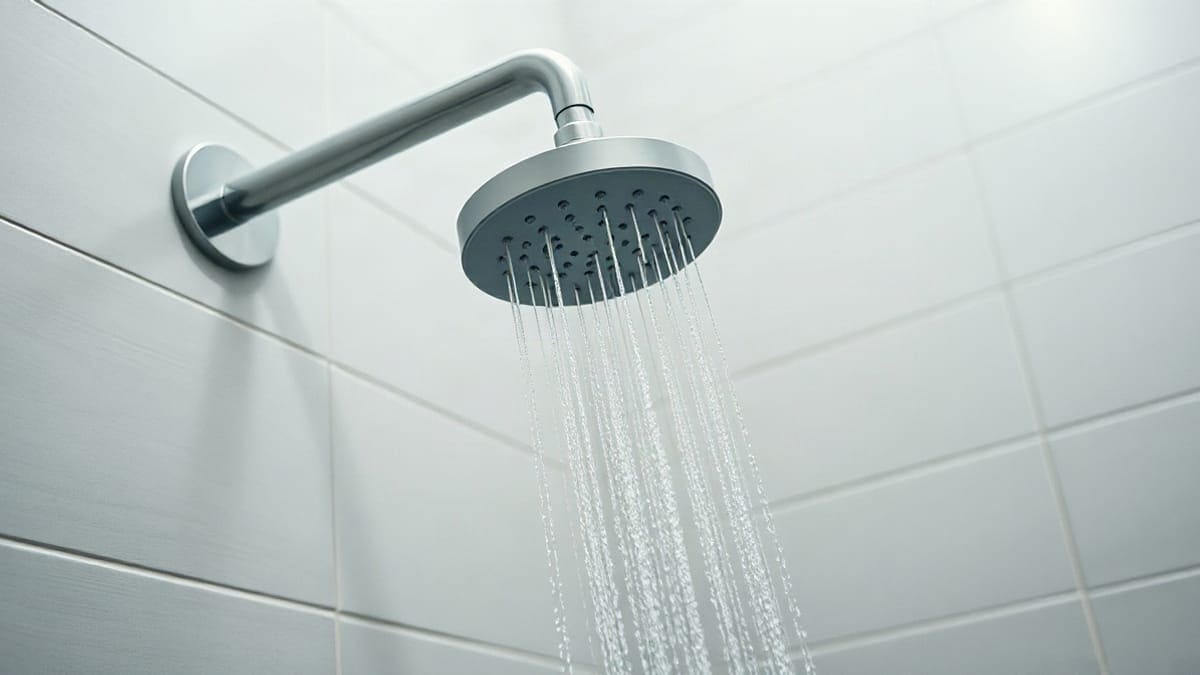
A shower filter sits between the shower arm and the showerhead and passes every gallon through media that hold chlorine. That is all the only shower standard, NSF/ANSI 177, covers. Below, nine models are set side by side on flow, cartridge life and the status each maker can name. Hard water is a different problem: it is dissolved calcium and magnesium, and none of the nine removes them in any data we could find, whether from a maker or from an independent lab. Each claim is sorted into certified, tested or merely stated, and the page says when to move to a softener. No price appears anywhere on it.
Nine shower filters at a glance
Water check
Nine filters list 1.8 to 2.5 GPM and 1,300 to 25,000 gallons per cartridge. Only the Culligan ISH-100 and the Weddell Duo give a status you can trace to a certifier, and no filter claims to change hardness.
The table shows each filter as its maker or the NSF database describes it in November 2026. A dash means the pages we read give no figure. Flow is a rating at the maker's test conditions, so a rated 2.5 GPM is a ceiling, not what your shower delivers. Where two pages from one maker disagree, the detail sections say so.
| Filter | Chlorine standard status | Flow stated | Cartridge life stated | Fit |
|---|---|---|---|---|
| Culligan ISH-100 | IAPMO R&T listing W-11659, NSF/ANSI 177 (maker manual names the ISH-100) | 1.8 GPM rated | 10,000 gal, about 6 months | 1/2 in threads |
| Weddell Duo | In the NSF 177 database | 2.0 GPM rated | 10,000 gal listed, 5 to 6 months | In-line |
| Jolie Filtered Showerhead | In the NSF 177 database | 1.8 GPM (maker) | 90 days for 1 to 2 users | Showerhead |
| Aquasana AQ-4100 | Independently tested to 177, not certified | 2.5 GPM (1.75 GPM WaterSense version) | 10,000 gal | In-line, with head |
| Sprite High-Output HO2 | Tested to 177 (manual) | 2.5 GPM rated | 25,000 gal or 1 year | Housing on the arm |
| Rorra Filtered Showerhead | Lab test to 177 protocol, not certified | 1.8 GPM optional restrictor | 90 days, about 4,000 gal | Showerhead |
| AquaTru Shower | Listed by IAPMO R&T to NSF/ANSI 177 (file W-30733) | - | 1,300 gal or 90 days | Showerhead |
| Hydroviv In-Line 2.0 | None claimed | 2.1 GPM (maker) | 10,000 gal, 6 months (maker) | In-line, 3.2 in by 4.3 in |
| AquaBliss SF100 | None claimed | - | 3 to 6 months | 1/2 in connection |
Which shower filter suits which home?
Match your complaint to a row. If the complaint is chlorine smell or dry skin after a swim-pool-like shower, a chlorine filter is the right tool. If it is white crust on the head and glass, no row below fixes it, and the last line points you to the right appliance. Check the disinfectant your utility uses first, because chloramine behaves differently from chlorine.
| Your situation | Pick | Why |
|---|---|---|
| Chlorine smell, you want a certifier named | Culligan ISH-100 | IAPMO R&T certification to NSF/ANSI 177 in the maker's data sheet, 1.8 GPM |
| Chlorine, you want the NSF database entry | Weddell Duo | Listed by NSF at 10,000 gal and 2.0 GPM, with test data to 10,000 gal |
| A showerhead and filter in one piece | Jolie Filtered Showerhead | NSF listing, 1.8 GPM, 90 day cartridge |
| A long cartridge life on a big family | Sprite High-Output HO2 | 25,000 gal or 1 year |
| Mineral-keeping filter, chlorine only | Hydroviv In-Line 2.0 | Hydroviv says it leaves calcium and magnesium in the water |
| A budget in-line filter | AquaBliss SF100 | 1/2 in universal fit, 3 to 6 month cartridge, no certification claimed |
| Chloramine in your city water | Read the chloramine section first | The Culligan and Sprite manuals say chloramine was not evaluated |
| Scale on the head, soap film, spotted glass | A softener, not a shower filter | Hardness is calcium and magnesium; see water softener vs water filter |
Brand pages: Hydroviv, Culligan and AquaTru.
Does a shower filter fix hard water?
Water check
No. Hard water is dissolved calcium and magnesium, USGS classes it as 121 to 180 mg/L (hard) and above 180 mg/L (very hard), and a chlorine filter leaves both minerals in the water. Lab results for five filters showed no drop in hardness.
USGS defines hardness as the amount of dissolved calcium and magnesium in the water. Penn State Extension adds that one grain per gallon equals about 17 mg/L, so 10.5 gpg is about 178 mg/L, the top of the "hard" band. A shower filter built for chlorine uses a carbon, KDF or calcium sulfite stage. Those stages work on chlorine, not on calcium ions, which is why the filter and the softener solve two different problems.
| Hardness class (USGS, mg/L as calcium carbonate) | Penn State class (gpg) | Soap and scale effect |
|---|---|---|
| 0 to 60, soft | Under 1.0 to 3.5 | Little soap film |
| 61 to 120, moderately hard | 3.5 to 7.0 | Below 7.0 gpg scaling is probably minor (Penn State) |
| 121 to 180, hard | 7.0 to 10.5 | Soap scum, scale on heaters and heads |
| Over 180, very hard | Over 10.5 | Heavy scale; USGS says it can raise heating costs |
Convert your own report with the water hardness converter or the ppm and gpg guide, and read the numbers in context on what is hard water and hard water vs soft water.
Why do water softeners work and shower filters do not?
A salt-based softener swaps calcium and magnesium for sodium on a resin bed, a process called ion exchange. Penn State Extension says the resin "releases its sodium ions and readily trades them for the calcium and magnesium ions", and that it must later be regenerated with a salt solution. A shower filter has no resin bed to do that trade. Water Filter Guru's lab write-up says most shower filters lack the ion exchange resin needed to reduce hardness. See how a water softener works.
What did lab data show about hardness after a shower filter?
Water Filter Guru, whose review was last updated September 7, 2026, put five shower filters through water analysis and found none lowered hardness. The figures below are that lab's data.
| Filter in that lab review | Hardness before to after | Chlorine before to after |
|---|---|---|
| Weddell Duo | 128.19 to 125.59 ppm, about 2%, normal variation | 1.68 to 0 ppm |
| AquaTru Shower | About 250 to about 295 to 298 ppm, up about 19% | 1.68 to 0.94 ppm, about 44% |
| Afina | 251 ppm, unchanged | to 0.02 ppm, about 99% |
| Canopy | Total hardness up 12.45%; carbonate hardness down 69% | 2.7 to 0.06 ppm, 97% |
| Filterbaby Pro | About 251 ppm, unchanged | 1.68 to 0.23 ppm, about 86% |
In the Canopy result carbonate (temporary) hardness fell, but total hardness did not. The same review reports that only a portable softener installed on the shower line softened the shower water in its work, which is why our shower softener guide exists. Weddell says its filter does not claim hardness reduction, and Hydroviv says its filters keep calcium and magnesium on purpose.
How do you fix hard water in a shower, an apartment or a house?
Water check
Match the fix to where you can plumb: scale on a head is cleaned, a shower-line softener treats one shower, a whole house softener treats every tap, and a renter needs landlord permission for anything cut into the pipes.
USGS says solid calcium carbonate deposits form when hard water is heated, and that scale can shorten equipment life and clog pipes. The table sorts the options by where you live. None is a filter.
| Where | What fixes it | What a chlorine filter adds |
|---|---|---|
| One shower head clogged with scale | Descale the head; see how to clean hard water off a shower head | Nothing for scale |
| One shower, no plumbing changes (apartment) | A shower-line softener or a portable water softener, after you ask your landlord | Chlorine only |
| An apartment with a small utility closet | A small water softener, if the lease and the plumbing allow | Chlorine only |
| A house, every tap and the water heater | A sized whole house softener; see what size water softener you need | Chlorine only |
| A washing machine | Soften the supply or follow laundry and washing machine softening | None |
Your utility's annual quality report lists hardness, and EPA's Consumer Confidence Report page explains how to find it. A home test kit or the guide to testing water hardness at home gives a quick number if the report is vague. The longer playbook is how to treat hard water at home.
What do NSF, WQA and EPA say about shower filters and hard water?
Water check
NSF/ANSI 177 certifies chlorine reduction only. NSF listed 11 shower filters from 7 manufacturers on November 18, 2026, each for free available chlorine, and none for hardness. EPA's disinfectant limit is 4.0 mg/L for chlorine and chloramines.
The NSF shower filtration listing shows the products certified to NSF/ANSI 177, and every one lists the claim "Free Available Chlorine Reduction". No NSF/ANSI 177 listing claims calcium or magnesium removal, and the standard is titled "Shower Filtration Systems - Aesthetic Effects". The Culligan manual spells out the test: a challenge water of 2 mg/L free available chlorine, with a minimum reduction of over 50% to carry the claim. Aquasana's data sheet shows a challenge of 1.95 mg/L plus or minus 10% and the same 50% minimum.
EPA's national primary drinking water regulations set a maximum residual disinfectant level of 4.0 mg/L for chlorine and for chloramines, both as Cl2 (page updated August 31, 2026). EPA's chloramines page says water that meets its standards is safe for bathing and that more than one in five Americans drink chloramine-treated water. In other words, a shower filter is a comfort choice for smell and skin feel, and EPA does not say you need one.
| Status | Who checks | What you can look up | Filters here |
|---|---|---|---|
| Certified | An outside body tests, audits the plant and lists the model | NSF database, WQA find products, IAPMO directory | Weddell Duo, Jolie (NSF); Culligan ISH-100 and AquaTru Shower (IAPMO R&T directory) |
| Independently tested | A lab runs a protocol, often paid by the maker | A data sheet or test report, no listing | Aquasana AQ-4100, Sprite HO2, Rorra (test dated October 6, 2025) |
| Stated | The maker says it | The maker's page | Hydroviv, AquaBliss |
Which shower filter claims can you look up?
Certified means an outside body tested the product, audited the factory and lists the model number, so you can look it up. Tested means a lab ran a protocol, with no listing to check. The Aquasana data sheet says "independently tested to NSF/ANSI Standard 177", the Sprite manual says "tested according to NSF/ANSI 177", and Rorra's page says its results "are test results, not certification". Jolie's page says its filter "far exceeds" NSF-177 certifications, which is marketing wording rather than a listing, although NSF does list the Jolie showerhead. Read the verb before you read the percentage.
The nine shower filters in detail
Water check
The nine filters rate from 1.8 to 2.5 GPM, with cartridges good for 1,300 to 25,000 gallons. Each section gives flow, life, certification status, one hard limit and who should look elsewhere.
Culligan ISH-100: the in-line filter with a certifier named
The Culligan ISH-100 is rated at 1.8 GPM and 10,000 gallons (about 6 months), works from 40 to 100 psi and 40 to 120°F, and its performance sheet says IAPMO R&T certifies it to NSF/ANSI 177 for free available chlorine. Culligan's installation guide and owner's manual uses cartridge WHR-140 and a standard 1/2 in threaded shower arm, three layers of Teflon tape and a five minute flush to clear carbon fines.
The same sheet says the system "has not been evaluated" for free chlorine reduction with chloramines, and that it is not for drinking. The manual says the media "reduces the build-up of scale" as tested by KDF Fluid Treatment, and that its skin and hair statements are "not tested or certified by IAPMO R&T", so those are the maker's statements, not part of the certification. IAPMO's directory lists Culligan International under Shower Filtration Systems, NSF/ANSI 177-2022 (file W-11659, active); it does not show the ISH-100 model by name, so the match to this model rests on the maker's sheet. Our Culligan consumer products review covers the brand.
Best for: chlorine on city water, a 1/2 in arm and a buyer who wants a certifier named. Not for: chloramine water, hard water scale or anyone who needs more than 1.8 GPM.
Weddell Duo: the NSF-listed twin cartridge
The Weddell Duo is listed by NSF at 2.0 GPM and 10,000 gallons for free available chlorine reduction, and Weddell's report shows chlorine reduction of over 97.4% at 4,200 gallons and 93.3% at 10,000 gallons. Weddell's test report page says NSF International certified it to NSF/ANSI 177 and NSF/ANSI/CAN 372 in 2023 and recertified it in 2026.
Two numbers disagree. The product page gives a 2.8 GPM flow and both 8,000 gallons (features and FAQ) and a 10,000 gallon rated capacity (tech specs), while the NSF listing and the test report give 10,000 gallons and a 2.0 GPM rating (2.8 GPM was a test condition for another standard). Cartridges change every 5 to 6 months. Water Filter Guru measured 1.42 GPM through the filter against a 1.72 GPM baseline, about 82% of the flow, and says the Duo does not reduce chloramine or hardness. Weddell recommends its 3+1 cartridge set in hard water, for extra sediment cartridges.
Best for: chlorine on city water and a buyer who wants an NSF database entry. Not for: chloramine water, or anyone who expects softer water.
Jolie Filtered Showerhead: the filter inside the head
The Jolie Filtered Showerhead is listed in the NSF/ANSI 177 database for chlorine reduction, lists 1.8 GPM, and uses a replacement filter that Jolie says to change every 90 days for 1 or 2 showering people and every 30 days for 3 or more. Jolie's product page describes a 125 micron stainless steel mesh and says the filter does not reduce pressure.
The NSF listing shows capacity and flow columns that look transposed, so we do not quote them. Jolie's claim of over 85% chlorine removal over the cartridge life comes from its own tests, and we did not find the report behind it. Jolie also says the head works in hard and soft water; read that as "it runs", since no hardness data is published.
Best for: a one-piece head and filter with an NSF listing. Not for: a family of four or more, because the 30 day change is a recurring cost, or anyone buying it for scale.
Aquasana AQ-4100: the 2.5 GPM filter with a pass table
The AQ-4100 family is rated at 2.5 GPM (1.75 GPM for the WaterSense versions) and 10,000 gallons, runs at 30 to 80 psi up to 115°F, and uses replacement cartridge AQ-4125. The performance data sheet says the system was independently tested to NSF/ANSI 177 and shows an overall chlorine reduction of over 91.61% with a challenge of 1.95 mg/L, plus or minus 10%.
The sheet is honest about the decline: single samples at 5,000 gallons read 82.27% and 81.28%, and at 10,000 gallons 88.61% and 87.13%. It says "tested", not "certified", and we did not find an NSF listing for Aquasana shower filters. The AQ-4100NSH, a model without a showerhead, meets EPA WaterSense when used with a compliant head at 1.75 GPM or less.
Best for: a high-flow shower and a buyer who likes a published data table. Not for: a buyer who needs a certification number, or one with chloramine.
Sprite High-Output HO2: the long-life housing
The Sprite HO2 uses cartridge HOC rated at 2.5 GPM, 25,000 gallons or 1 year (whichever comes first), with a 125 psi maximum and a 120°F limit. Sprite's use and care instructions say the system "has been tested according to NSF/ANSI 177" for free chlorine, and that it was not evaluated in the presence of chloramines.
The manual asks you to run hot water through the system to activate the filter, then cool the water to the desired temperature before you step in, and to reverse the cartridge periodically to keep flow up. It says nothing about hardness, and we did not find an NSF listing for Sprite.
Best for: a large household that wants the longest rated life here. Not for: a buyer who needs a listing, or one who wants to clear scale.
Rorra Filtered Showerhead: the KDF and calcium sulfite head
The Rorra showerhead uses KDF-55 and calcium sulfite, lists an optional 1.8 GPM flow restrictor, and Rorra says to change the cartridge every 90 days, which it puts at about 4,000 gallons. Rorra's testing page reports an NSF/ANSI 177 chlorine test by Kymera (WQA) in Durham, NC, on October 6, 2025, with an average 91% reduction through 4,000 gallons, and a structural integrity test passed at IAPMO on February 25, 2025 (10,000 cycles).
The same page says the showerhead results are test results and that Rorra's products are not yet formally certified or listed by NSF. A 30 day study of 48 people on its site reports self-described hair results, not a water measurement. Our Rorra review covers the brand.
Best for: chlorine reduction with a published test report, and a flow restrictor that caps use at 1.8 GPM. Not for: a buyer who needs a certification, or any hard water fix.
AquaTru Shower: the 1,300 gallon cartridge
The AquaTru Shower uses copper-zinc alloy, calcium sulfite and catalytic carbon, and AquaTru says to replace the cartridge every 90 days or 1,300 gallons. AquaTru says the shower is not a substitute for a whole-home softener, so it makes no hardness claim.
AquaTru's product page says the shower is tested and certified by IAPMO to NSF Standard 177 to reduce chlorine, and the IAPMO directory lists AquaTru, LLC under Shower Filtration Systems, NSF/ANSI 177-2023 (file W-30733, active). The listing covers free chlorine only. Water Filter Guru's review (April 21, 2026) measured chlorine falling from 1.68 to 0.94 ppm (about 44%) and total hardness rising about 19%, at 1.63 GPM against a 1.72 GPM baseline.
Best for: a short cartridge cycle with a brand that is honest about softeners. Not for: a busy household, since 1,300 gallons runs out quickly.
Hydroviv In-Line Shower Filter 2.0: the mineral-keeping filter
The Hydroviv In-Line 2.0 measures 3.2 in by 4.3 in, uses KDF-55 and calcium sulfite, and Hydroviv claims over 93% chlorine reduction and a 6 month cartridge. Hydroviv's FAQ says its shower products have not yet undergone formal certification, and that its filters do not soften water or reduce hardness, leaving calcium and magnesium in the water on purpose.
The product page lists 2.1 GPM, a 10,000 gallon capacity and a 6 month filter life. Its drinking water systems' IAPMO certifications do not transfer to the shower filter. See our Hydroviv review.
Best for: a buyer who wants a plain statement that the filter keeps minerals in. Not for: a buyer who needs a certification, a published flow rate or a hardness fix.
AquaBliss SF100: the budget universal fit
The AquaBliss SF100 fits a 1/2 in shower arm with no tools, lists a cartridge life of 3 to 6 months and carries a 1 year warranty and a 30 day guarantee. AquaBliss's page claims reduction of chlorine, chloramine, sediment and trihalomethanes, and makes no NSF or other third-party certification claim.
The page gives no flow rate, only that it is designed to keep full pressure. Its own FAQ says its Vitamin C and tourmaline are different materials from the calcium and magnesium that make water hard, and that using them does not change hardness either way. That is a rare, accurate statement among hard water shower filter sellers.
Best for: a budget buyer who wants chlorine reduction with no hardness promise. Not for: a buyer who needs a certification or a published GPM.
How do you choose a shower filter for hard water?
Water check
Check four things in order: your hardness in gpg, the disinfectant your utility uses, flow against your showerhead (2.5 GPM standard, 2.0 GPM WaterSense) and cartridge life against your shower count. Hardness decides whether you need a softener at all.
Under 3.5 gpg, hardness is not your problem and a chlorine filter may be all you want. Above 7.0 gpg (120 mg/L), Penn State says scaling and soap film become likely, and a softener is the tool.
How much flow will you lose?
EPA says standard showerheads use 2.5 gallons per minute and that WaterSense showerheads must use no more than 2.0. A filter adds resistance. Water Filter Guru's measurements show 1.42 GPM through the Weddell Duo against a 1.72 GPM baseline (82% retained) and 1.63 GPM through the AquaTru Shower (about 94%).
A filter rated below your head's flow, such as the Culligan at 1.8 GPM on a 2.5 GPM head, becomes the limit, which can be a saving: EPA says WaterSense showerheads could save an average family 2,700 gallons a year.
When does each cartridge run out?
EPA's WaterSense page says showering is nearly 17% of indoor use, nearly 40 gallons a day for the average family. Our assumption is four people, one 8 minute shower each. At 1.8 GPM that is 14.4 gallons a shower and 57.6 gallons a day; at 2.5 GPM it is 20 gallons and 80 a day. Divide each rating by that.
| Filter | Rated life | Days at the assumed use | Months |
|---|---|---|---|
| Culligan ISH-100 (1.8 GPM) | 10,000 gal | 174 days | 5.7 |
| Weddell Duo, NSF listing (1.8 GPM used) | 10,000 gal | 174 days | 5.7 |
| Weddell Duo, product page | 8,000 gal | 139 days | 4.6 |
| Aquasana AQ-4100 (2.5 GPM) | 10,000 gal | 125 days | 4.1 |
| Sprite HO2 (2.5 GPM) | 25,000 gal | 313 days, then the 1 year cap | 10.3 |
| Rorra (1.8 GPM) | 4,000 gal | 69 days | 2.3 |
| AquaTru Shower (1.8 GPM) | 1,300 gal | 23 days | 0.7 |
Rorra's 90 days and 4,000 gallons imply 44 gallons a day, about 3 showers of 8 minutes at 1.8 GPM, so a family of four reaches the gallons first. AquaTru's 90 days and 1,300 gallons imply 14.4 gallons a day, exactly one such shower, so a family of four hits 1,300 gallons in about 3 weeks. Hard or sediment-heavy water shortens every cartridge, as Weddell and Culligan both warn.
Does your city use chlorine or chloramine?
The NSF/ANSI 177 claim covers free available chlorine. The Culligan and Sprite manuals both say the systems were not evaluated for chlorine reduction in the presence of chloramines, and Weddell's FAQ says its filter does not reduce chloramine. Look up your utility's report through EPA's Consumer Confidence Report page; EPA says more than one in five Americans drink chloramine-treated water. For a whole house option aimed at both, see the chlorine and chloramine filter guide.
When is a whole house softener the real answer?
Water check
When your water is above 7.0 gpg (120 mg/L) and you see scale, soap film or spotted glass, treat the water once at the main line. A softener removes calcium and magnesium; a shower filter does not.
Penn State Extension's sizing method is gallons per person per day times hardness in gpg times people. Its example uses 75 gallons, 10 gpg and 4 people: 3,000 grains a day, so a 20,000-grain unit regenerates every 6 to 7 days. Penn State puts bath and shower use at 25 to 60 gallons per person per day, so the shower is a large share of that water.
| Complaint | Shower filter | Whole house softener |
|---|---|---|
| Chlorine smell | Yes, if 177 matches your disinfectant | No, softeners do not filter chlorine |
| Scale on the showerhead | No | Yes |
| Soap film, spotted glass | No | Yes |
| Hot water heater scale | No | Yes (Penn State: scale shortens heater life) |
| Dry skin from hard water | Not shown | Not shown; see below |
For both jobs, see the water softener and filter combo guide. If you have a private well, read the shower filter for well water guide first, because iron and bacteria change the answer. For the carbon side, see the best whole house water filtration system.
Does hard water cause dry skin or eczema?
Not on the evidence we found. In the SWET trial, 336 children aged 6 months to 16 years with moderate or severe eczema in hard-water areas were randomised to an ion-exchange softener plus usual care, or usual care alone. At 12 weeks the softener group improved by 5.0 points on the SASSAD score and the usual-care group by 5.7, a difference of 0.66 (95% CI -1.37 to 2.69, p = 0.53). The authors concluded that softeners gave no additional benefit to usual care in that group. Ask a doctor about eczema, and see does hard water cause eczema.
How do you install a hard water shower filter?
Water check
Installation takes minutes and no tools on a standard 1/2 in shower arm: remove the head, wrap 3 layers of Teflon tape, hand-tighten the filter, refit the head and flush the cartridge for 5 minutes (Culligan manual).
Culligan's manual lists seven steps. Remove the showerhead by turning counterclockwise, clean the thread, wrap three layers of tape, screw the filter on by hand (about three turns), tape the outlet thread, install the head and check for leaks. Do not overtighten, and do not hang from the head. Sprite says not to use its housing with a shut-off valve. The manuals also warn that the filter is not for drinking water.
If flow drops, Culligan says to flip the cartridge front to back, since it is reversible, and run water to flush the trapped sediment. Replace the cartridge at the rated gallons or when flow falls, whichever comes first.
Shower filters for hard water: our conclusion
Water check
No shower filter here softens water, so buy one for chlorine and a softener for scale. The Culligan ISH-100 and the Weddell Duo lead for chlorine, and above 7.0 gpg a softener is the real answer.
The Culligan ISH-100 is an in-line filter whose maker names IAPMO R&T certification to NSF/ANSI 177, at 1.8 GPM and 10,000 gallons Check price on Amazon. The Weddell Duo appears in NSF's database for chlorine reduction, at 2.0 GPM rated Check price on Amazon. A family that wants the longest cartridge looks at the Sprite HO2 (25,000 gallons, then the 1 year cap) Check price on Amazon, while the AquaTru Shower keeps about 94% of flow but lasts about 3 weeks for four people Check price on Amazon. Check your utility for chloramine, which the Culligan and Sprite manuals say they were not evaluated for. Scale, soap film or spotted glass point to the best water softener.
5 common mistakes with shower filters for hard water
Water check
The costliest mistake is buying a shower filter to remove scale: it cannot, and each of the five mistakes below either wastes a cartridge or leaves the real problem untouched.
Buying a chlorine filter for a calcium problem
Hardness is dissolved calcium and magnesium, and the lab results above show no change after filtering. Fix: test hardness, then use the table above.
Reading "tested" as "certified"
Aquasana, Sprite and Rorra say tested. Culligan, Weddell and Jolie are certified or listed. Fix: look up the model in the NSF, WQA or IAPMO database.
Ignoring chloramine
If your city uses chloramines, the 177 claim may not apply, as the Culligan and Sprite manuals say. Fix: read your utility report before you buy.
Changing the cartridge by the calendar only
The gallons can run out first. A family of four reaches 4,000 gallons in about 69 days at the assumed use, before Rorra's 90 days. Fix: divide the rating by your household use.
Treating a filter as a health device
EPA says chloramine-treated water that meets standards is safe for bathing. Fix: ask a doctor, and keep expectations to smell and feel.
Frequently asked questions
Do shower filters work for hard water?
Not for hardness. They work on chlorine within the standard's claim, which NSF/ANSI 177 sets at over 50% free chlorine reduction in a 2 mg/L test. Water Filter Guru's lab data found no drop in hardness across five filters, so choose a softener for scale.
Do shower filters soften hard water or just remove chlorine?
They only remove or reduce chlorine, and sometimes sediment. Softening needs ion exchange, which swaps calcium and magnesium for sodium, and shower filters have no resin to do it. See water softening methods compared.
Do shower filters remove calcium and magnesium?
No filter on this page claims to. The NSF/ANSI 177 database lists chlorine reduction only, Weddell, AquaTru and Hydroviv make no hardness claim, and the lab review found hardness at 125.59 to 251 ppm unchanged or higher after filtering. USGS defines hardness as dissolved calcium and magnesium.
What is the best shower filter for hard water?
None softens, so the best choice depends on the job. For chlorine, the Culligan ISH-100 (IAPMO R&T certified, 1.8 GPM) or the Weddell Duo (NSF listed, 2.0 GPM). For scale, a softener. The best shower head for hard water page covers heads.
Is there a shower head that filters hard water?
There are shower heads with filters, such as the Jolie, but none is shown to filter hardness. The Jolie is NSF-listed for chlorine, and its page publishes no hardness data. Scale-resistant heads are a separate topic on the shower head page.
How do you filter hard water for a shower?
You cannot filter calcium out with a carbon cartridge. You soften it, either at the main line with a sized softener or at one shower with a portable shower-line softener. Water Filter Guru found only the portable softener lowered hardness in its shower work. See do shower head water softeners work.
Where can you buy a shower head filter for hard water?
The Check price buttons on this page lead to each model's listing. Buy replacement cartridges from the same maker, and match the cartridge to your filter version before you order.
Does a Sprite shower filter remove hard water?
No. Sprite's manual for the High-Output HO2 says it was tested to NSF/ANSI 177 for free chlorine, rates the HOC cartridge at 2.5 GPM and 25,000 gallons or 1 year, and says nothing about hardness.
Does an Aquasana shower filter remove hard water?
No. The AQ-4100 data sheet reports a chlorine challenge test only (over 91.61% overall at 1.95 mg/L) and no hardness result. It is independently tested, not certified, to NSF/ANSI 177.
Do shower filters prevent hard water deposits on shower doors?
No. Deposits on glass are calcium carbonate left as water dries, and USGS says solid calcium carbonate forms when hard water is heated. A chlorine filter leaves the calcium, so the deposits continue. Wipe the glass after each shower, and see how to remove hard water stains and buildup.
Do shower filters help hair and skin in hard water?
The evidence is thin. Culligan's manual says its skin and hair statements are not tested or certified by IAPMO R&T, Rorra's 30 day study of 48 people reports self-described results, and a softener showed no extra eczema benefit in the SWET trial. Read hard water skin and hair effects for the wider picture.
Do shower filters remove chloramine?
Often not. The Culligan and Sprite manuals say chloramine was not evaluated, and Weddell says its filter does not reduce it. AquaTru and AquaBliss claim chloramine reduction, and AquaTru's NSF/ANSI 177 listing covers free chlorine only.
How often should you change a shower filter in hard water?
At the rated gallons or the interval, whichever comes first, and sooner if flow drops. Ratings run from 1,300 gallons (AquaTru) to 25,000 gallons (Sprite). Weddell warns that hard water and sediment slow cartridges down sooner.
Will a shower filter work on well water?
For chlorine, there is none to remove on most private wells, and iron, sulfur or bacteria need other treatment. EPA's private wells page says well owners are responsible for testing, and our shower filter for well water guide covers the options.
How do you install a hard water shower filter?
Wrap 3 layers of Teflon tape on the 1/2 in arm thread, hand-tighten, refit the head and flush for 5 minutes, as the install section above explains.
Do dermatologists recommend shower filters?
We found no dermatology guideline in the sources we read that recommends a shower filter for hard water. The evidence is thin: a softener showed no extra eczema benefit in the SWET trial, and the maker studies we read rely on self-described results. If you have eczema or sensitive skin, ask your own dermatologist, and see hard water skin and hair effects.
What are the downsides of using a shower filter?
A shower filter does not take calcium and magnesium out of the water, so scale stays on glass and heaters. The cartridge has a short rated life in gallons or months, a filter in the head can lower flow, and few models have a certification you can look up, since NSF/ANSI 177 lists only 11 shower products from 7 makers. For hardness itself, read the best water softener page.
How we researched this page
Water check
Nine filters were picked from our Impact brand list and from models sold in the United States. We read maker manuals, data sheets and pages, searched the NSF 177 shower filtration listing, and did not test any filter ourselves. We publish no store ratings.
We read the NSF/ANSI 177 database page (current as of November 18, 2026) and Culligan's, Aquasana's and Sprite's own sheets. We read the IAPMO directory on November 18, 2026: it lists Culligan International and AquaTru under NSF/ANSI 177 and lists no Hydroviv shower product. Hydroviv's and AquaTru's product pages were read in a browser the same day, and their figures are maker claims. Rorra's, Jolie's and Weddell's pages are read in part. Flow and cartridge figures are missing where a maker does not publish them. Water Filter Guru's lab figures are that site's, not ours. Buying through a Check price link earns the site a commission at no extra cost to you.
Sources
Our sources by topic
Public agencies and universities
- USGS, Hardness of water; Penn State Extension, Water Softening.
- U.S. EPA, WaterSense showerheads, chloramines, national primary drinking water regulations, Consumer Confidence Reports and private wells.
- Thomas KS and others, A randomised controlled trial of ion-exchange water softeners for the treatment of eczema in children, PLoS Medicine 2011.
Certification and standards bodies
- NSF, shower filtration systems, NSF/ANSI 177 listing and certified drinking water treatment units; WQA, find products; IAPMO directory.
Manufacturers, retailers and other references
- Culligan, in-line shower filter manual and performance data sheet, ISH-100, ISH-200, ISH-200c (2021).
- Weddell Water, Duo shower filter and third-party test reports.
- Aquasana, AQ-4100 and AQ-4105 shower filter performance data; Sprite, High-Output shower filter use and care instructions.
- Jolie, Filtered Shower Head; Rorra, Filtered Showerhead and testing page; AquaTru, AquaTru Shower; Hydroviv, In-Line Shower Water Filter 2.0 and FAQ; AquaBliss, SF100.
- Water Filter Guru, best shower head filter, lab results (updated September 7, 2026), Weddell Duo review and AquaTru shower filter review.
Keep comparing
 Whole House Water Filtration SystemEight whole house water filters compared by rated flow in GPM, capacity in gallons
 Reverse Osmosis System for HomeEight reverse osmosis systems compared by NSF-listed output, drain water, feed pressure and certification
 Under Sink Water Filters (Without Reverse Osmosis)Nine under sink filters with no drain water compared by rated gallons, flow
 Countertop Reverse Osmosis Systems, No InstallationTen plug-in countertop reverse osmosis systems compared by tank size, drain water
 Whole House Water Filter and Softener ComboEight packaged whole house filter and softener combos compared on flow in GPM, grains, filter life in gallons
 Water Filter PitchersEight water filter pitchers compared by cartridge gallons, flow and the certification each maker names